Walking through the gorge with wooden bridges and carved walkways
Not far from Lake Bled, in the villages of Gorje, the Radovna River flows through a narrow gorge between the forested hills of Hom and Boršt.
Vintgar Gorge is one of the best-known natural attractions in this part of Slovenia. Yet, beyond its beautiful scenery, there is something else that makes walking through the gorge such a memorable experience.
For me, it is the sound of the water. From the moment you enter the gorge, the Radovna River accompanies you along the wooden walkways, sometimes flowing gently through clear pools, sometimes rushing between the rocks.
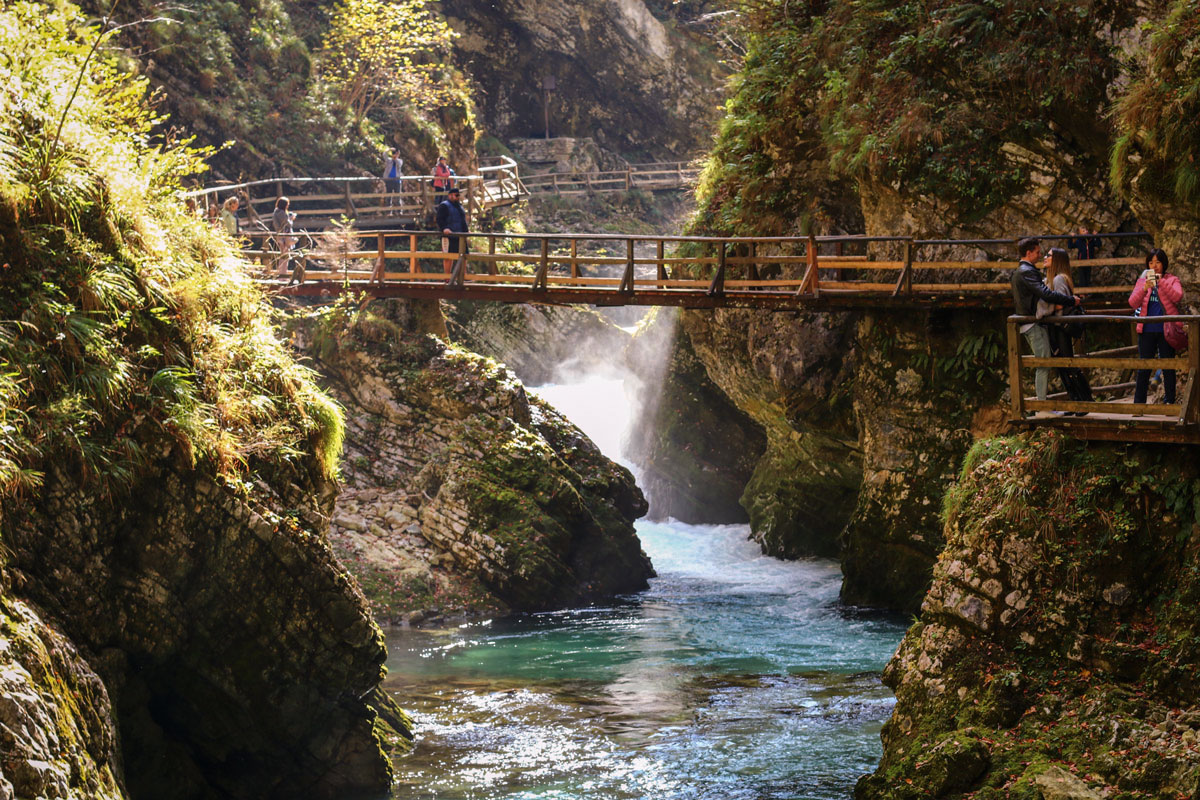
Vintar Gorge is connected by wooden walkways, offering beautiful views along the way.
There is something calming about listening to the river and watching the water find its way through the narrow gorge.
Following the sounds of the Radovna River
One of the things I appreciate about Vintgar Gorge is how much the surroundings change along such a short stretch of river. In some places, the water is so clear that you can see the stones beneath the surface. If you look closely, you might even spot a brown trout moving quietly in the current.
Elsewhere, the river becomes much livelier, flowing over rocks and creating small waterfalls.
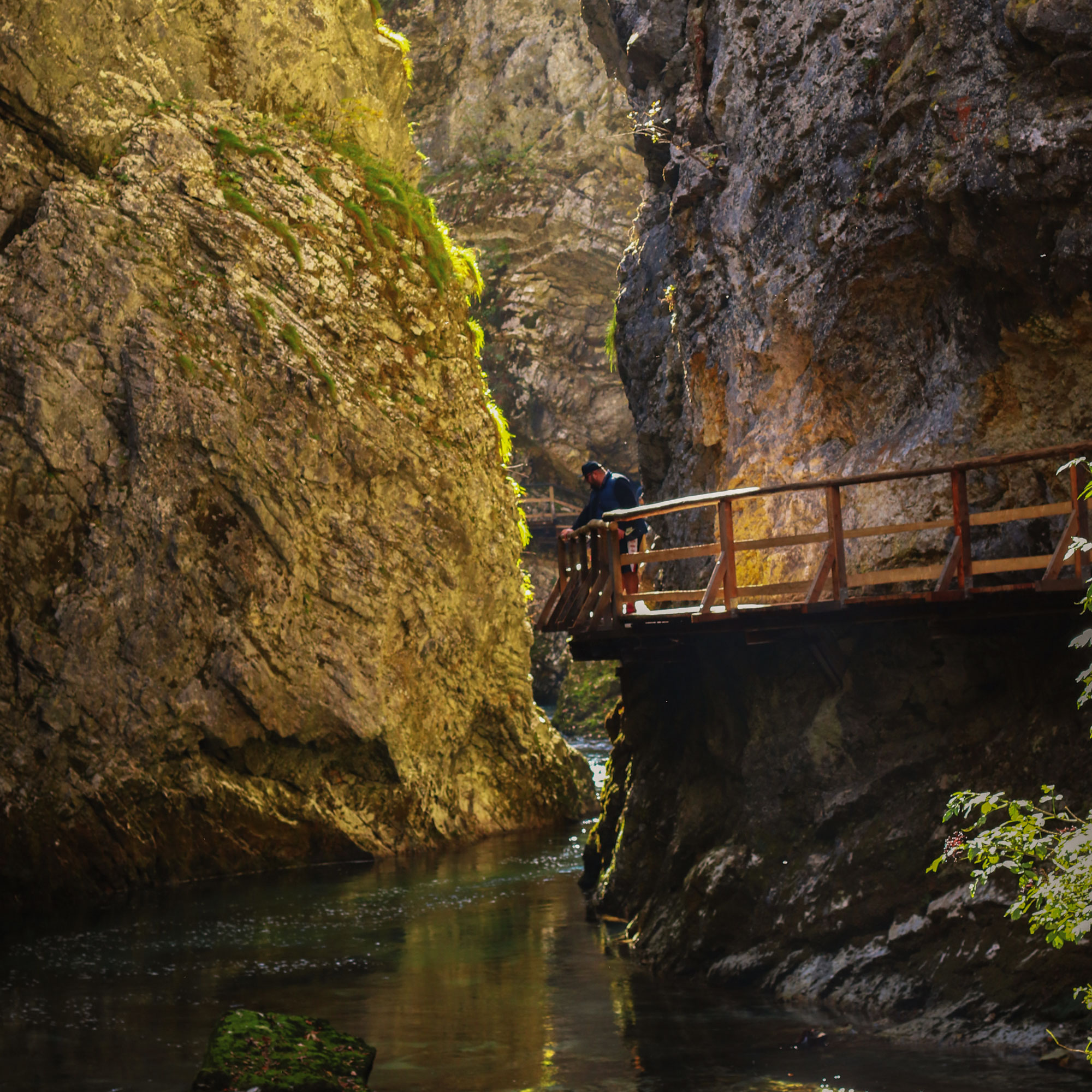
The wooden walkways lead along the steep rock walls, sometimes taking you just above the rushing water. Looking up, you can see the forest rising on either side of the gorge, with beech trees growing along the slopes.
On warm summer days, the cool air coming from the river offers a welcome change from the heat outside.
At the end of the gorge, the Radovna River tumbles over a 13-metre-high waterfall known as Šum. Its name refers to the sound of rushing water, something you can experience for yourself while standing on the nearby wooden bridge.
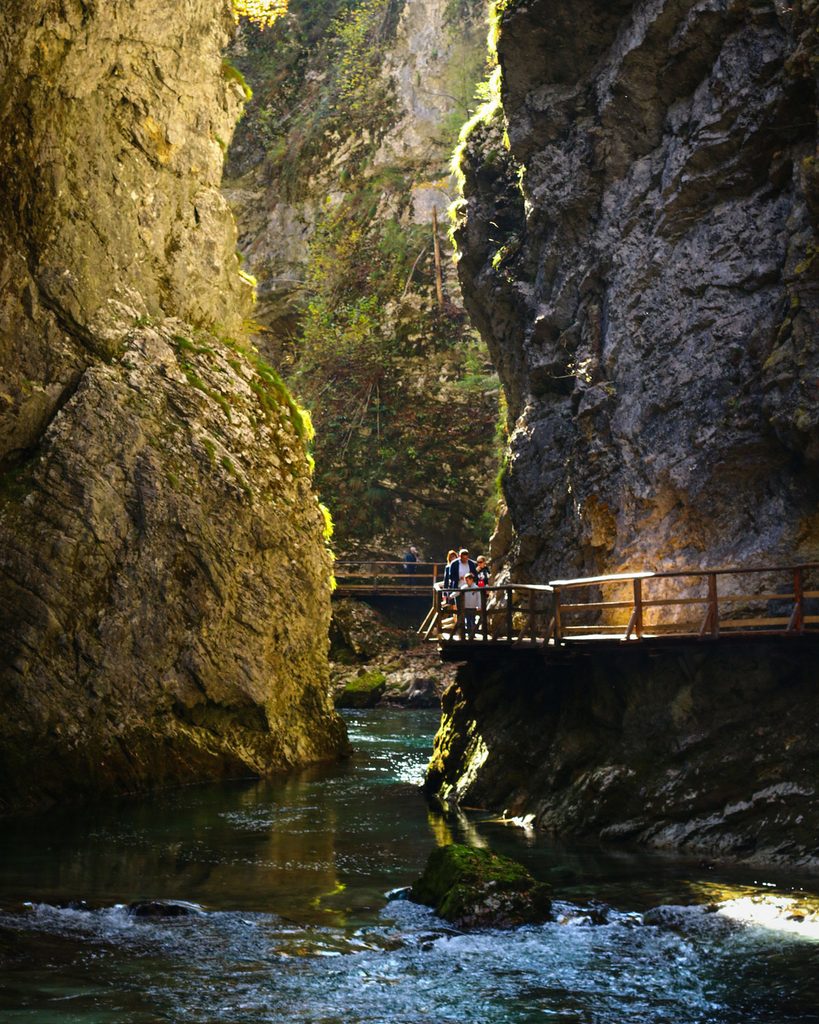
The Radovna River begins its journey beneath Triglav, the highest mountain in Slovenia.
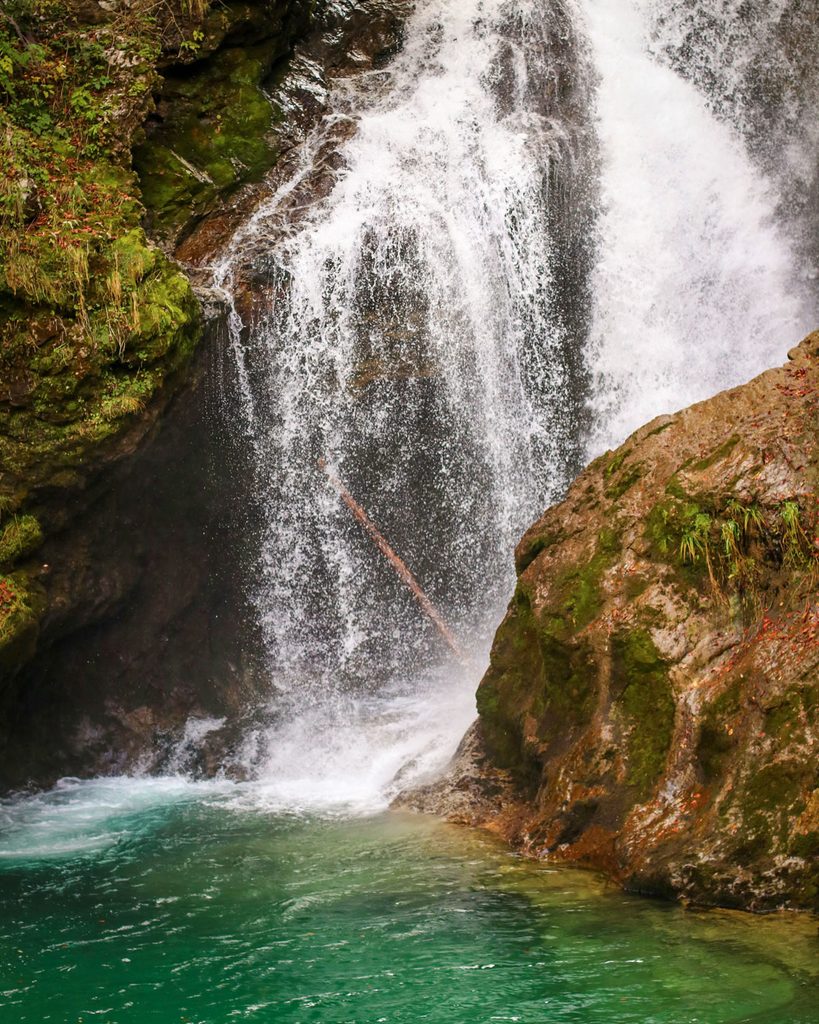
At the end of the Vintgar Gorge, you will be greeted by the Šum Waterfall.
The story behind Vintgar Gorge
Although Vintgar Gorge is a familiar place today, walking through it was not always possible.
The local people had known about Šum Waterfall for a long time, but the narrow gorge beyond remained difficult to access.
In 1891, Jakob Žumer, the mayor of Gorje at the time, and photographer Benedikt Lergetporer explored the gorge and recognised its remarkable natural beauty.
Soon afterwards, the local community began building wooden walkways and bridges, making it possible for people to walk alongside the Radovna River. One of the most beautiful sections of the gorge, known as Žumer’s Galleries, still carries the name of the former mayor.
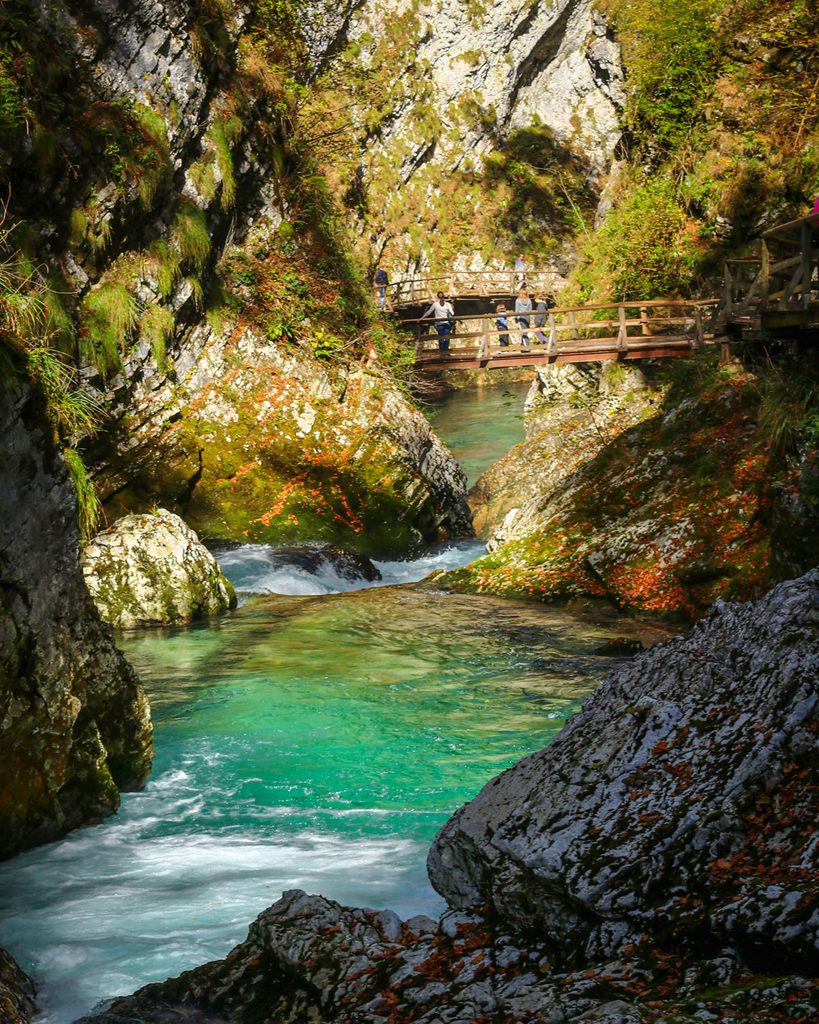
For many, Žumer’s Galleries feel like the most intimate part of Vintgar Gorge.
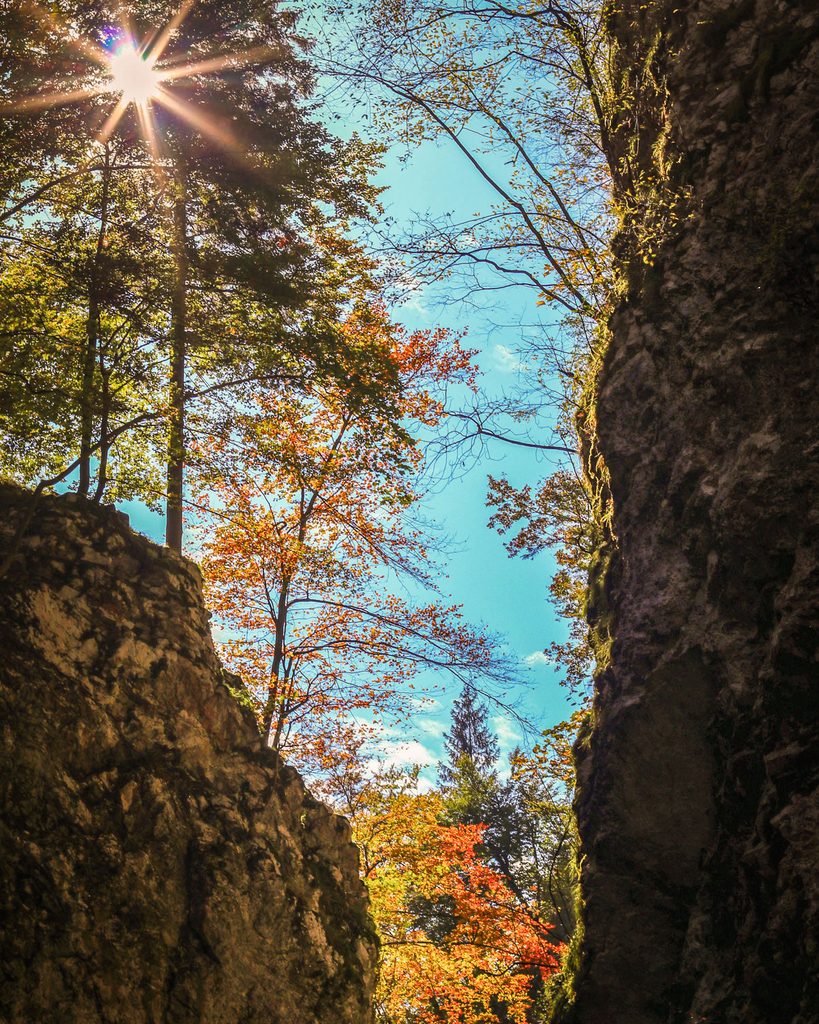
An autumn walk through Vintgar Gorge offers a different experience from visiting it in summer.
Where nature meets another piece of local history
As you continue through Vintgar Gorge, an old stone railway bridge appears high above the river.
Built at the beginning of the 20th century, the railway line above Vintgar Gorge once formed part of a connection between Prague and Trieste.
Today, you can still cross the gorge by train, travelling over the old stone bridge and enjoying a view of the gorge from above. The railway line between Jesenice and Nova Gorica passes through places such as Podhom, Bled Jezero railway station, Bohinj and Most na Soči along the way.
Visiting Vintgar Gorge
Planning your visit to Vintgar Gorge begins with the seasons. The gorge opens in spring, usually in April, and remains accessible until the middle of autumn, October or November, depending on the weather. You can find all the information for your visit on the official website of Vintgar Gorge.
Inside the gorge, the path is gentle and easy to follow. Well-maintained walkways and wooden bridges guide you forward, keeping the walk mostly flat and unhurried. As you move through, you are walking on the bridges that were constructed by hard-working locals 150 years ago!
If you plan to visit Vintgar Gorge in the high season (from June to August), expect a livelier rhythm. The paths fill with people, and the quiet becomes harder to find.
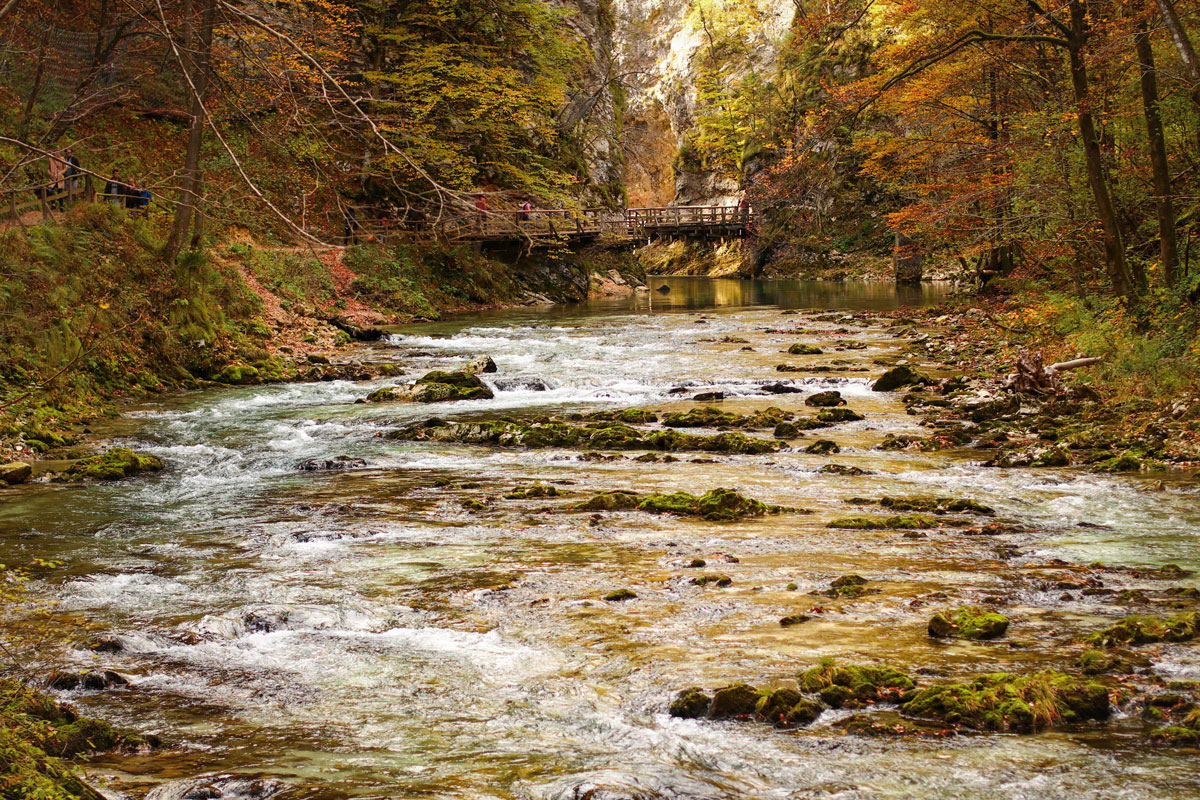
In its final stretch, Vintgar Gorge opens up and becomes wider.
Returning to Vintgar Gorge in different seasons
Over the years, I’ve come to appreciate how familiar places change with the seasons, and Vintgar Gorge is no exception.
In spring, fresh green leaves begin to cover the steep forested slopes above the Radovna River. By summer, the gorge is surrounded by lush greenery, and the cool air rising from the water offers a welcome escape from the heat. The wooden walkways also become much busier with visitors.
As autumn arrives, the beech trees gradually turn shades of yellow, orange and brown, bringing a different atmosphere to the rocky gorge.
Through all these seasonal changes, the Radovna River continues to flow between the rocks. Even though the gorge itself remains much the same, the changing colours, light and sounds of nature make each visit a little different.
Below, you’ll find a few practical details to help you plan your visit to Vintgar Gorge. If you would like to discover Bled and its surrounding countryside with a local guide, I’d be happy to take you on a guided walk, sharing local stories and some of my favourite places along the way.

PRACTICAL INFORMATION
- Location: Vintgar Gorge or Soteska Vintgar in Slovenian lies in the municipality of Gorje (Google maps), one hour walk from Bled. It stretches between the hills of Hom (834 metres) and Boršt (931 metres), within Triglav National Park, the country’s only national park.
- Starting point: The entrance to the gorge is located in the settlement of Podhom.
- Walking time: The walking trail is around 1.5 kilometres long, and it takes 30-45 minutes to reach the end of Vintgar Gorge without stopping. The trail is circular, meaning you will not return the same way. Get more infromation here.
- Safety: For safety reasons, visitors are required to wear a helmet, which is provided with the ticket. In spring, the risk of falling rocks is highest. Learn more about staying safe here.