A walk through the forest, past steep limestone walls, a cave with natural windows and old wooden galleries
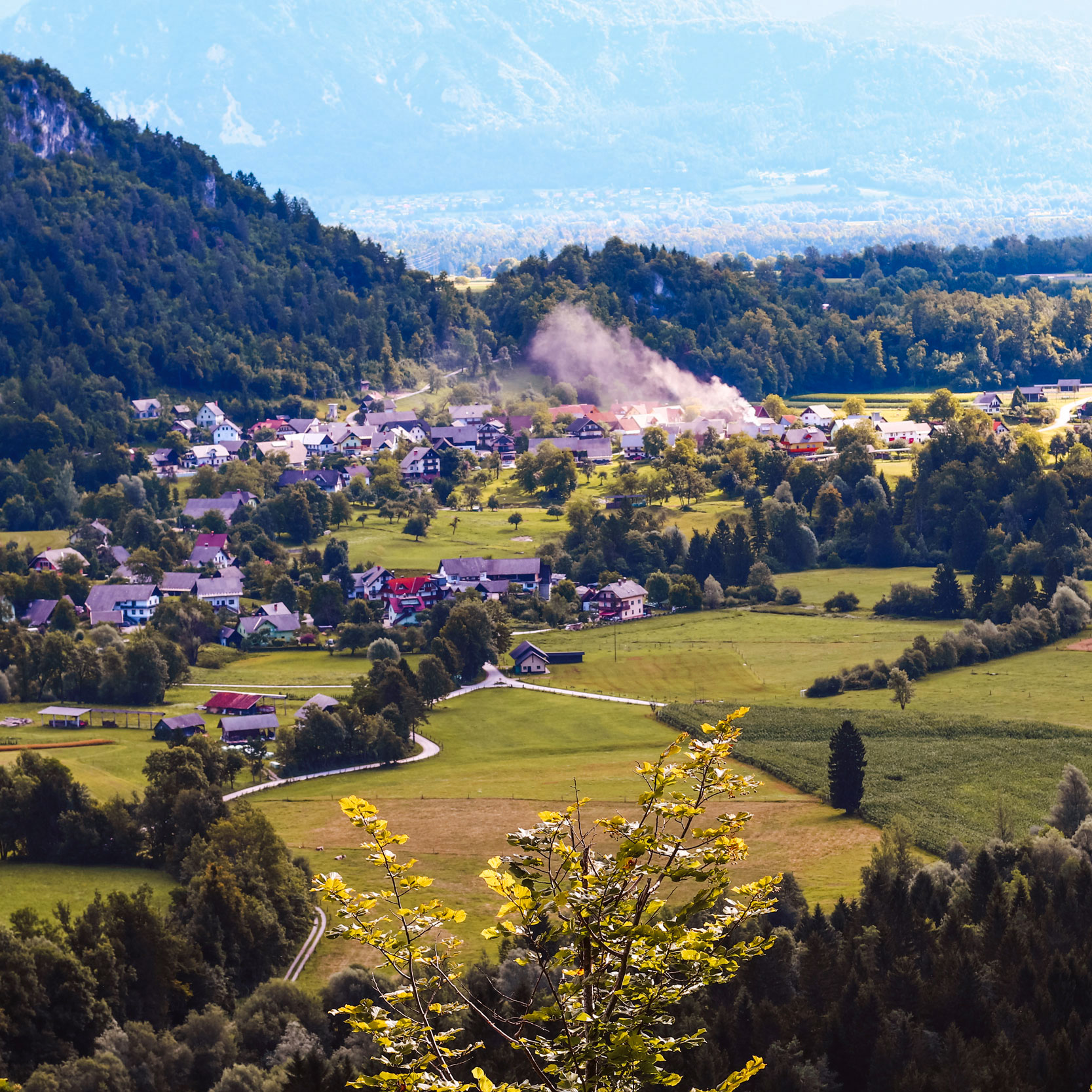
Not far from the Bled countryside, on the edge of the forested Pokljuka Plateau that you can see from Lake Bled or sourrounding hills, lies a gorge that offers a rather different experience from the familiar walks around the lake.
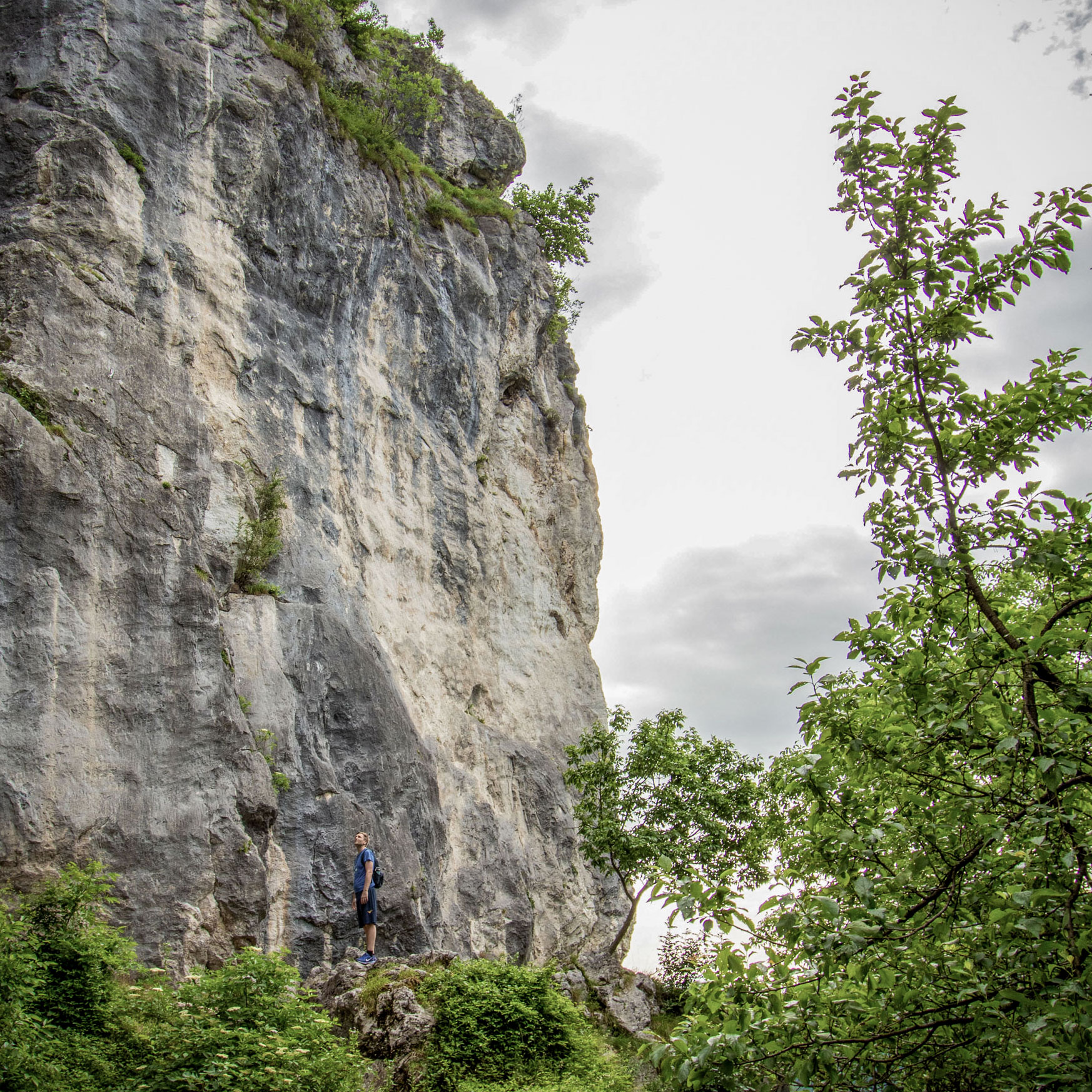
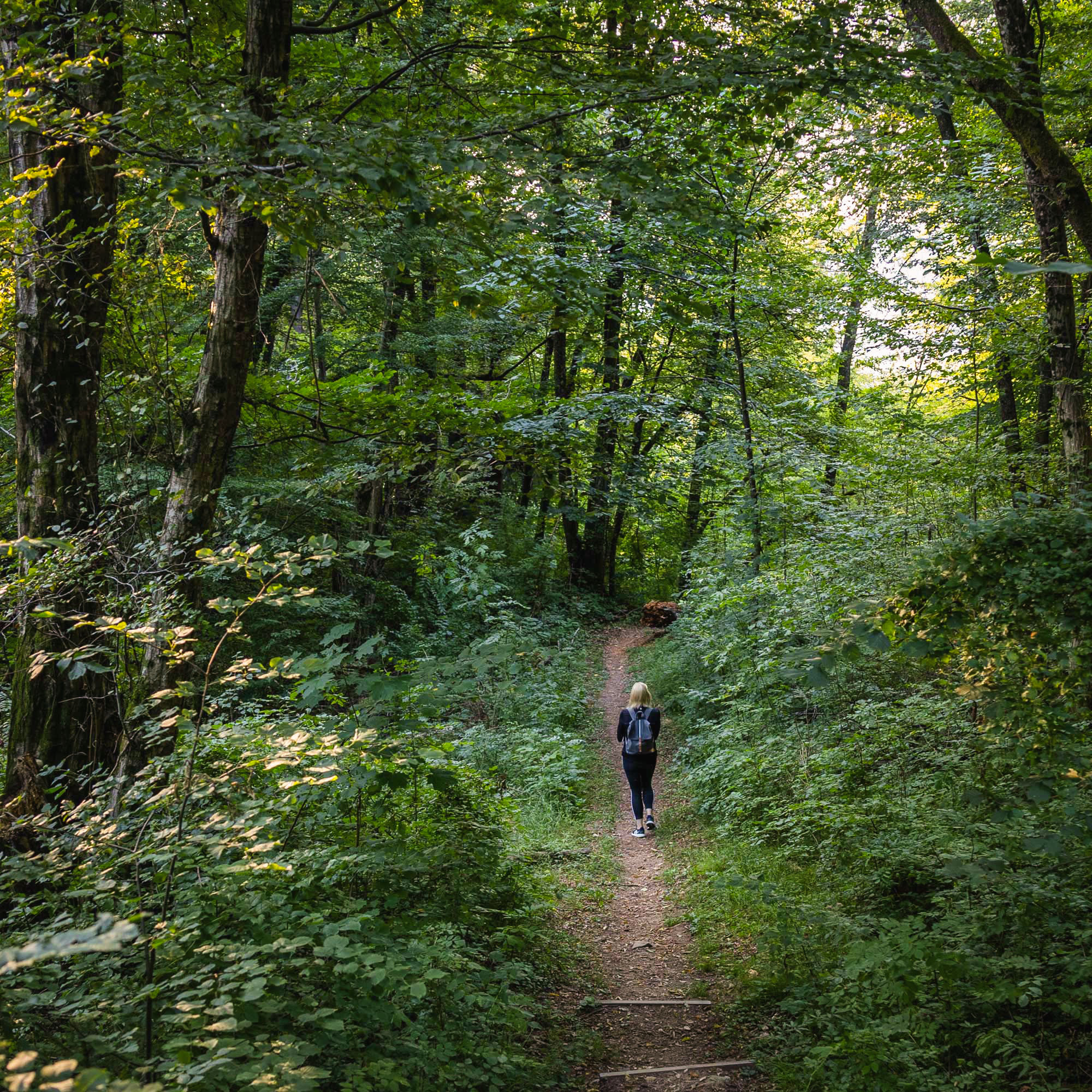
Pokljuka Gorge, or Pokljuška soteska in Slovenian, is part of Triglav National Park. Its walking trails lead through dense forest, between high limestone walls, past a cave with natural windows and along wooden galleries built into the rocks.
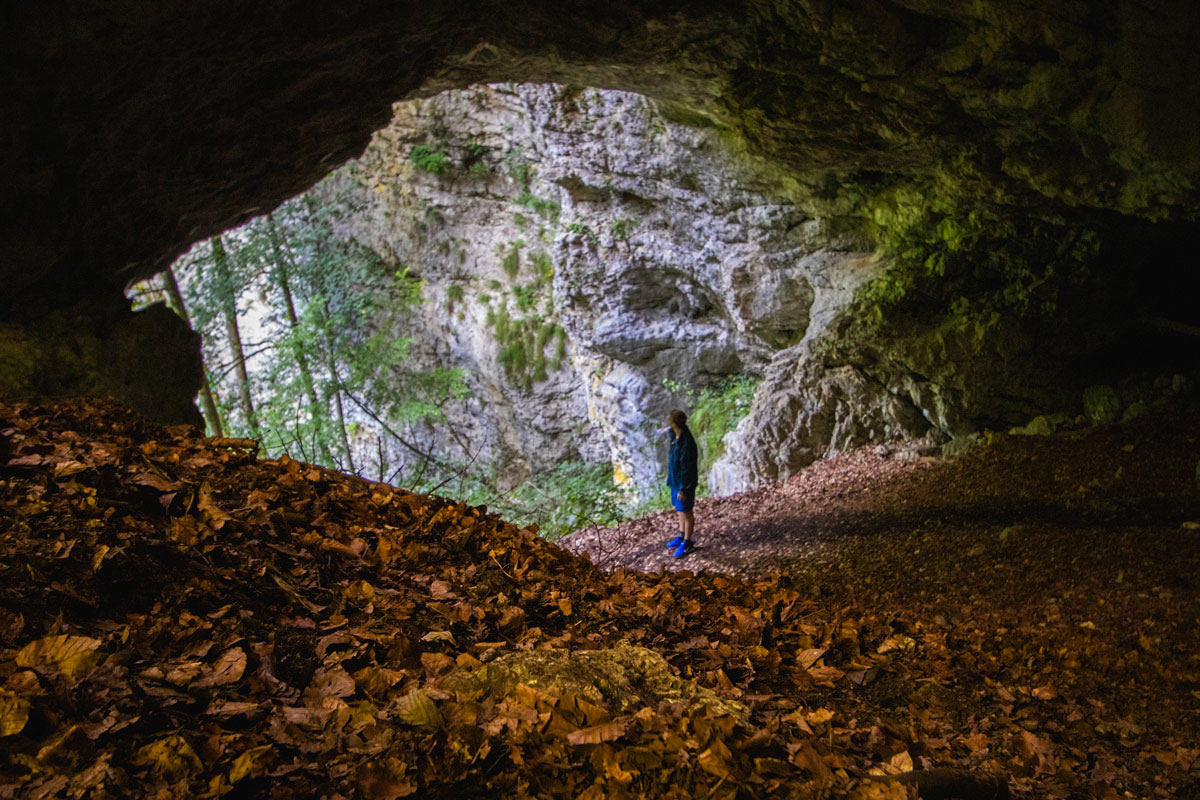
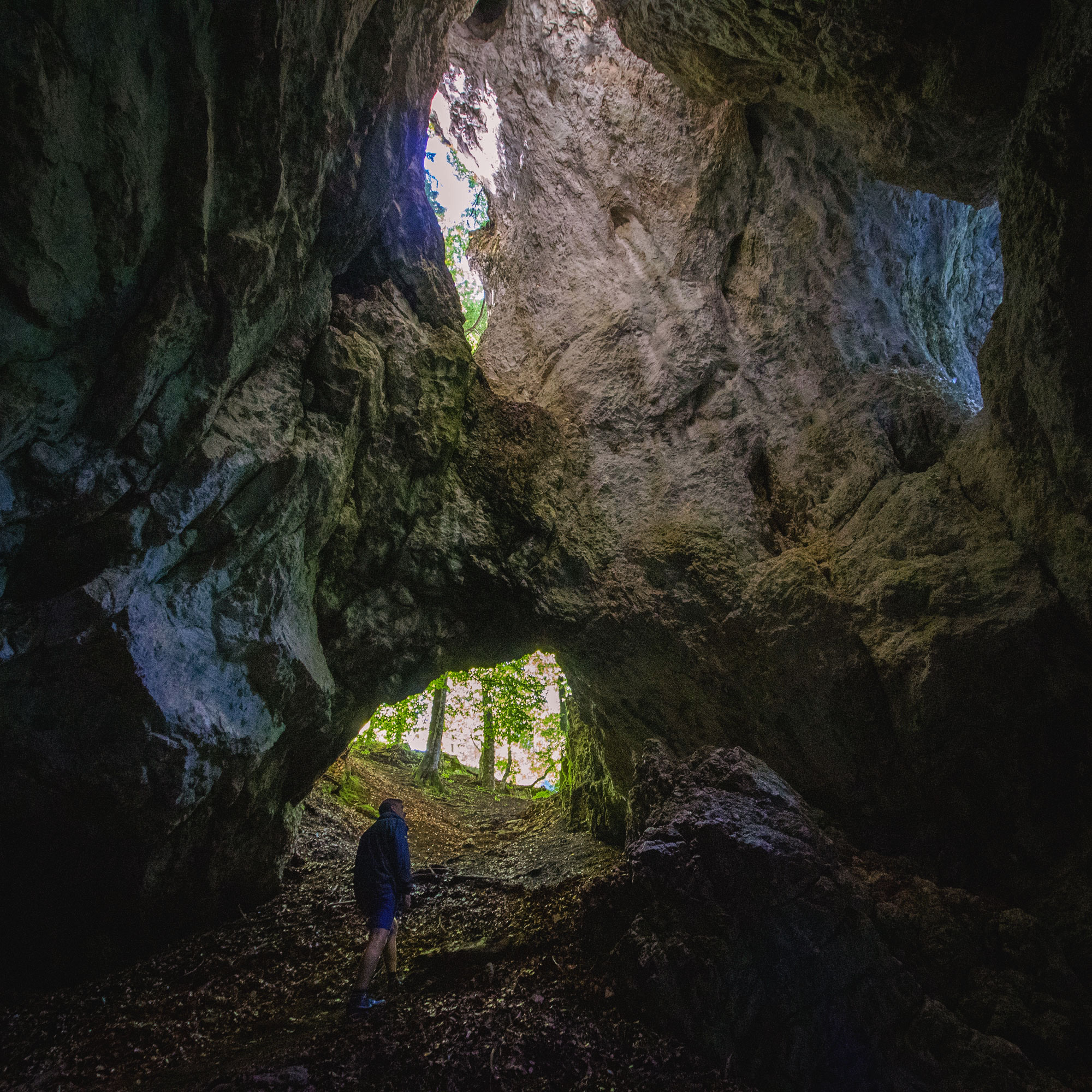
Apart from the forested trails, Pokljuka Gorge also hides a cave with natural windows.
Unlike nearby Vintgar Gorge, where the Radovna River flows through the rocky landscape, Pokljuka Gorge is mostly dry.
As you walk through the gorge, passing by its steep walls, it is hard to imagine that this place was once a shallow sea. Around 200 million years ago, in the time of the dinosaurs, corals grew here. Today, their traces remain – preserved in the fossils in the limestone, quietly telling the story of a world that no longer exists.
Following the forest trail throught Pokljuka Gorge
There are several ways to reach Pokljuka Gorge. The route described here begins near the village of Krnica, on the edge of the Radovna Valley, about eight kilometres from Lake Bled. You can also enter the gorge from higher up on the Pokljuka Plateau, following the trails from Zatrnik or Mrzli Studenec.
From Krnica, a gravel road leads past meadows and open fields towards the entrance to the gorge.
Soon, the surroundings begin to change. The path follows a usually dry riverbed, the forest grows denser and the limestone walls gradually rise above you.
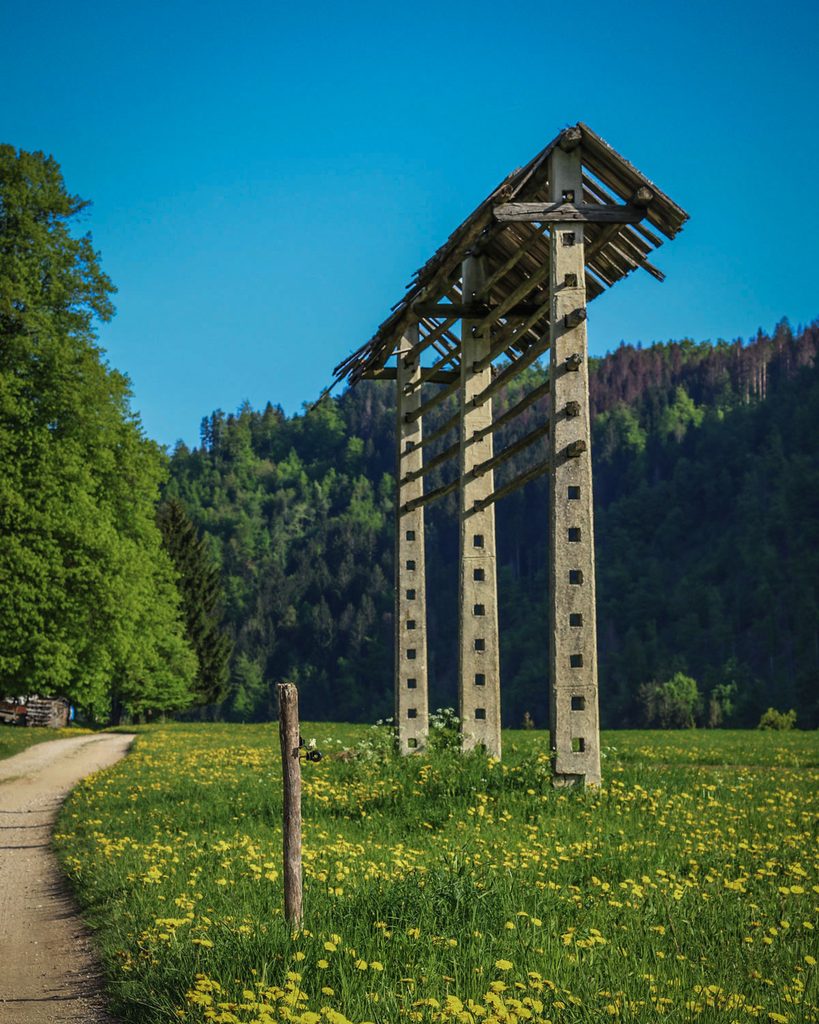
A gravel road leading towards the entrance to Pokljuka Gorge.
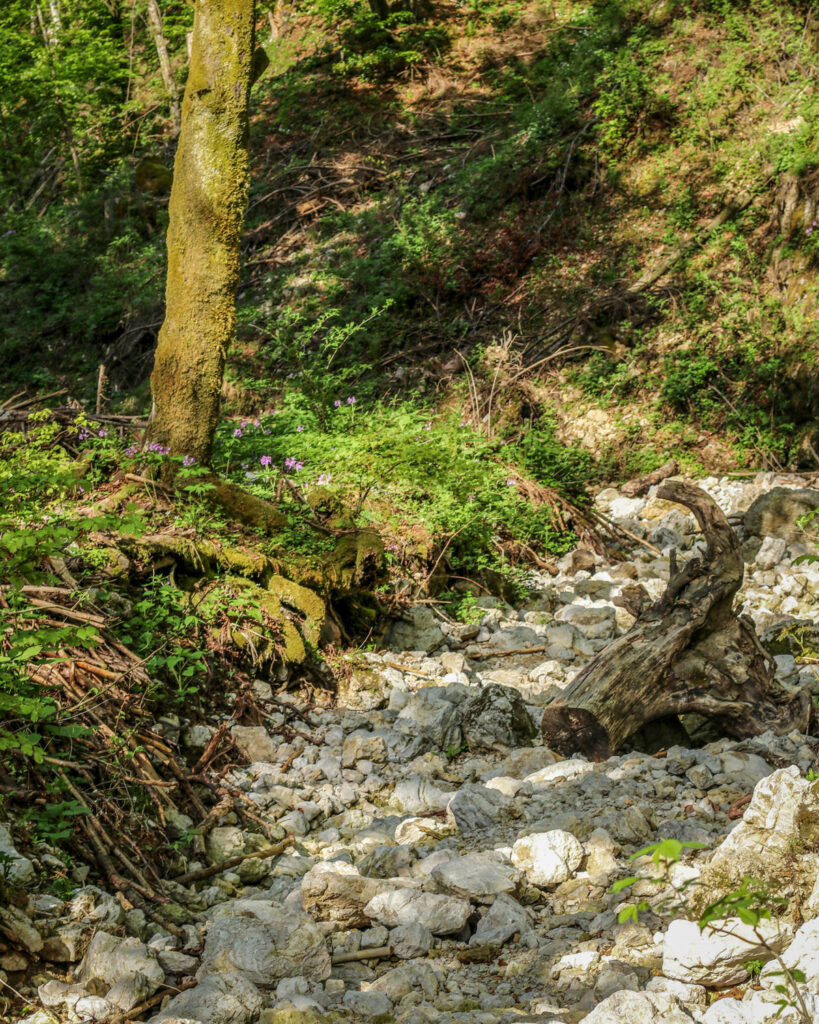
The beginning of the trail through Pokljuka Gorge, following a dry riverbed.
Along the way, you will notice small, wider sections of the gorge where the vegetation grows particularly lush. Locally, these are known as vrtci.
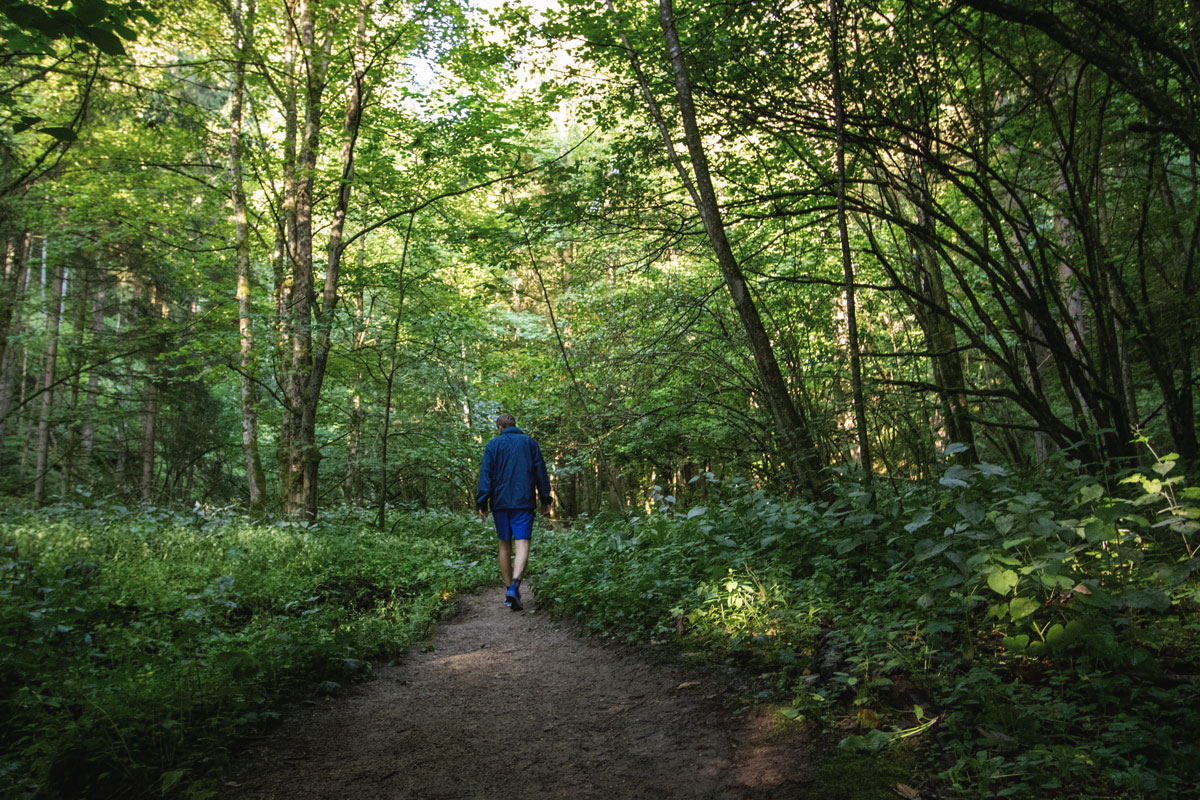
The wider, greener sections of Pokljuka Gorge are locally known as vrtci.
I find it interesting how much the landscape changes along this relatively short walk. In some places, the forest opens up and sunlight reaches the ground. Elsewhere, the rocky walls stand close together, creating a cooler, more sheltered atmosphere.
After around twenty minutes, the path branches off to the left into a small side valley. At its end, a high rock wall hides a waterfall that appears after heavy rainfall or during the spring snowmelt.
Continuing along the main trail, you will reach another junction after approximately thirty minutes of walking. From here, you can turn right towards Pokljuka Hole or left towards the wooden galleries.
Exploring a cave once used by locals to cross from one side of the gorge to the other
One of the most interesting places along the trail is Pokljuka Hole, known locally as Pokljuška luknja. It is a spacious limestone cave with two entrances and three natural windows through which daylight enters.
Long before people began visiting Pokljuka Gorge for recreation, this passage was part of an old route connecting the Radovna Valley with the forests and meadows of Pokljuka.
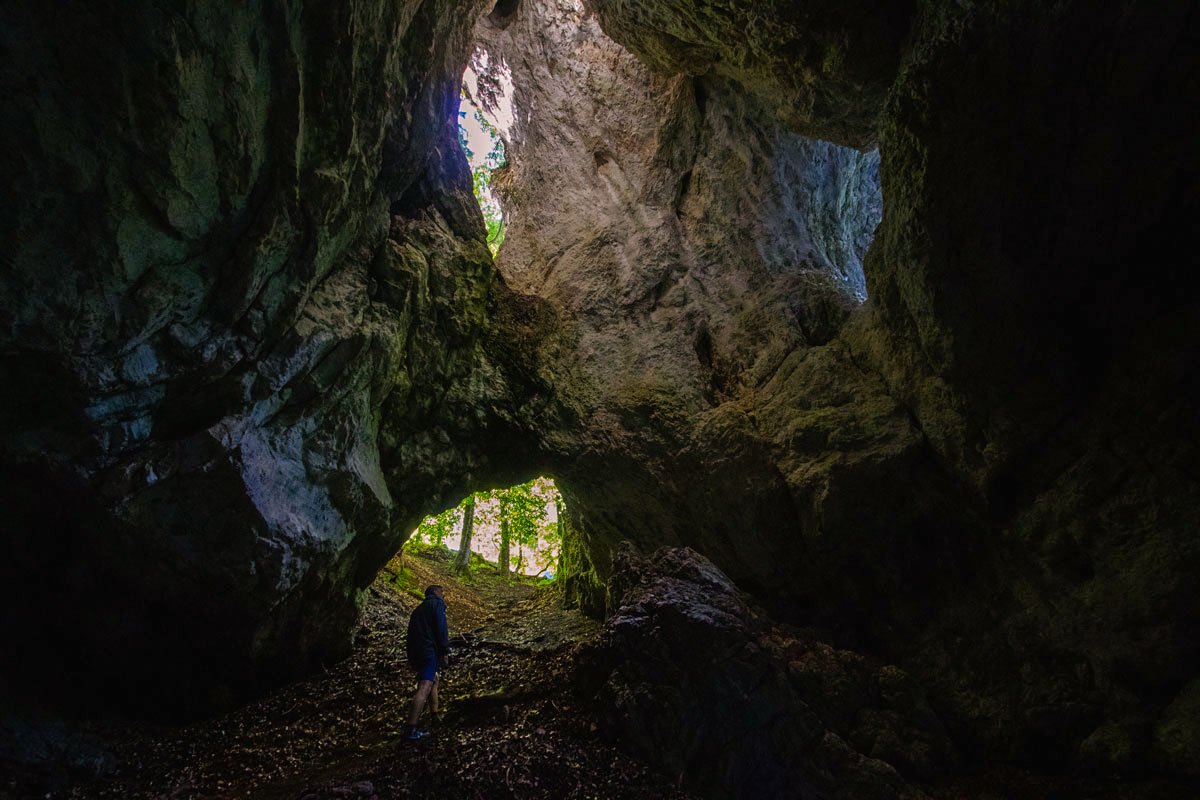
Inside the Pokljuka Hole, light enters the cave through its natural windows.
For generations, local people travelled through this area while gathering wood and resin or working in the surrounding forests. Charcoal production was once an important activity on Pokljuka, supplying fuel for the iron industry in the valleys below.
Walking along the wooden galleries of Pokljuka Gorge
After exploring Pokljuka Hole, you can return to the intersection and continue along the trail to the left. The trail passes beneath a natural stone bridge before reaching one of its most recognisable features: the Prince Andrew Galleries.
These wooden walkways were built into the steep limestone walls in 1930, allowing people to pass through a narrow section of the gorge. They were named after Prince Andrew, the son of King Alexander I of Yugoslavia, who was born in Bled. At that time, this part of Slovenia belonged to the Kingdom of Yugoslavia.
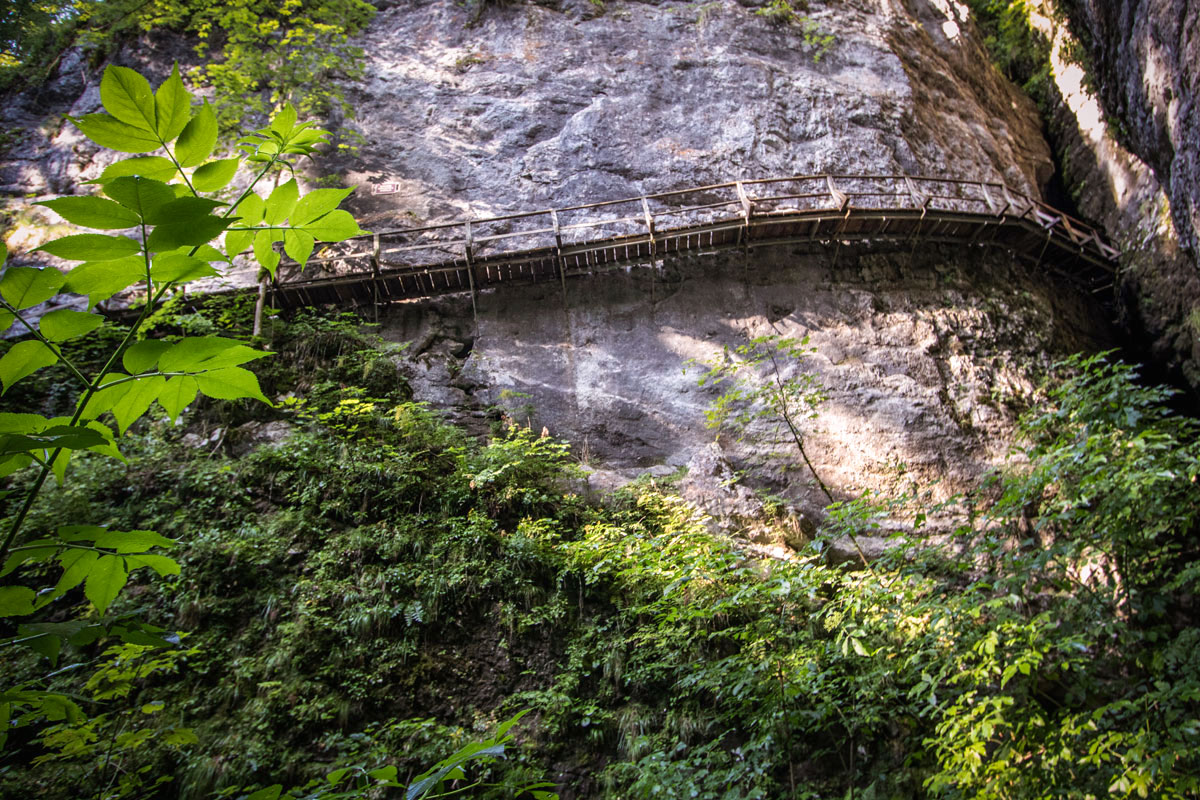
Enjoy the views from the Prince Andrew Galleries before continuing deeper into the gorge, where narrow rock passages and wild terrain invite further exploration.
Before the galleries were constructed, travelling through the entire gorge was much more difficult.
Today, the wooden paths offer an unusual perspective on the surrounding rock formations. In places, the walls rise almost vertically, while ferns and other plants grow from small openings in the limestone.
Finding calm in the quiet of Pokljuka Gorge
Pokljuka Gorge is not the sort of place where you need to rush from one viewpoint to another. For me, much of its appeal lies in the experience of walking through the changing landscape, noticing the plants growing between the rocks and taking time to appreciate the surroundings.
It is also a reminder that the area around Bled has many different sides to discover, from open countryside and gentle forested hills to more rugged places such as this.
If you are visiting during the busy summer months, especially between June and August, I would recommend setting out early in the morning, when the trails are generally quieter.
Below, you’ll find some practical information to help you plan your hike through Pokljuka Gorge. If you would like to explore Lake Bled and its surrounding hills with a local guide, I’d be happy to take you on a guided walk, sharing some of my favourite places and local stories along the way.

PRACTICAL INFORMATION
- Location: Pokljuka Gorge (Google maps) lies on Pokljuka Plateau in Triglav National Park, around eight kilometres northwest of Bled. The gorge is located in the Municipality of Gorje, an area also known for another natural attraction, Vintgar Gorge.
- Starting point: The route described here begins near Krnica, on the edge of the Radovna Valley. Other access trails lead from Zatrnik and Mrzli Studenec.
- Getting there: You can reach Krnica by bicycle or bus. If travelling by car, parking is available in designated areas in Zgornje Gorje, including near the primary school and cemetery. From there, allow approximately 30 minutes to walk towards the trail’s starting point. Check current parking arrangements before visiting.
- Walking time: Pokljuka Gorge is approximately two kilometres long. Allow around an hour and a half for a leisurely walk through the gorge and back, depending on your chosen route, conditions and how often you stop. Allow extra time if walking from Zgornje Gorje.
- Safety: The path follows uneven, rocky terrain, with some slippery sections and narrow wooden galleries. Suitable hiking shoes with good grip are essential. Because of the risk of falling rocks, Triglav National Park recommends wearing a helmet and advises against visiting in bad weather or winter conditions. Before setting out, check the latest information on the official website of the Triglav National Park.