Follow a forest trail to a cave below a tooth-shaped rock
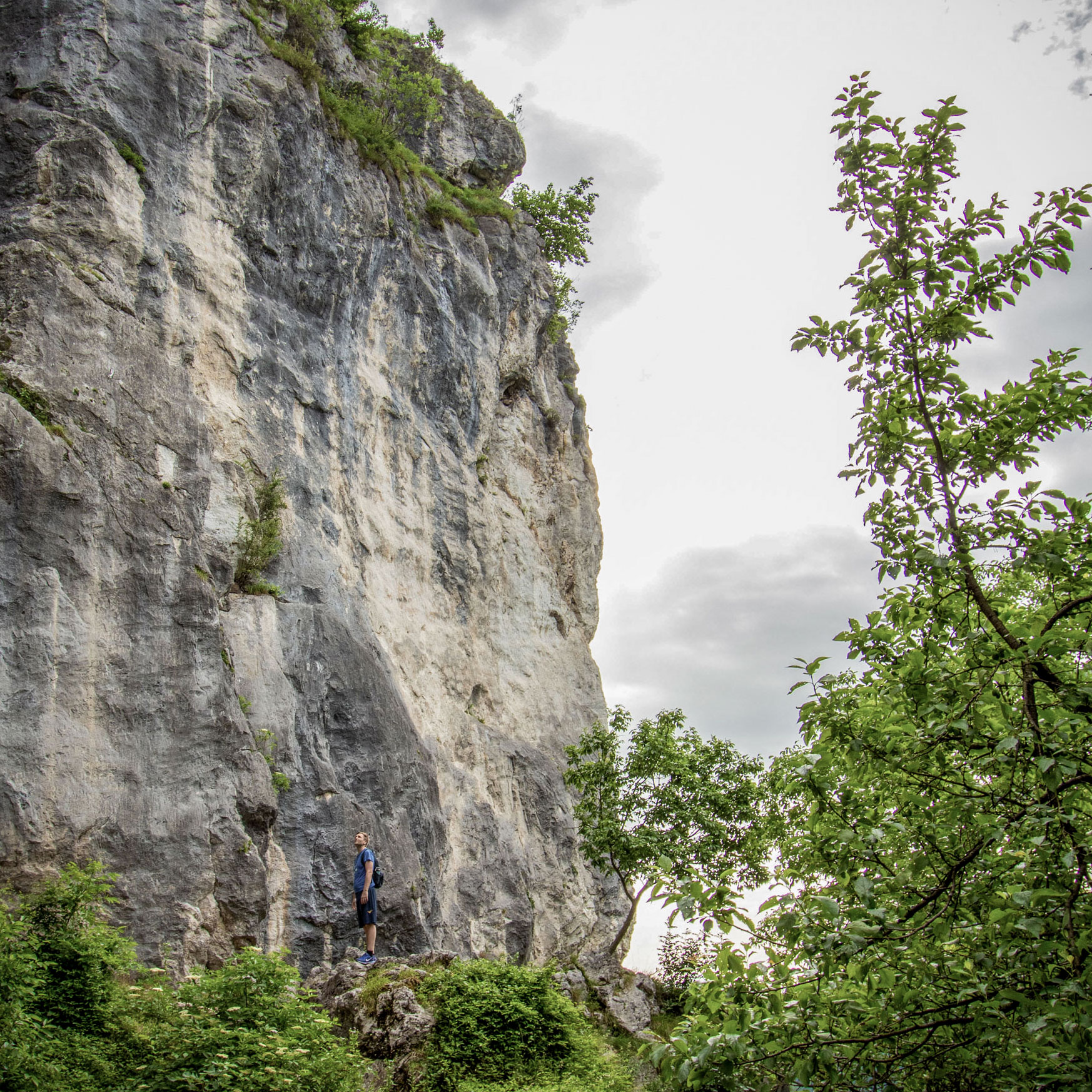
If you feel like combining a hike with exploring a cave, you can do so on the Jelovica Plateau, a karst plateau not far from Lake Bled. Under Babji zob – a tooth-shaped rock formation which name means “Old Woman’s Tooth” – lies a karst cave that you can reach by a one-hour hike through the forest.
It is one of many karst caves found across Slovenia, yet its quiet setting above the gorge of an alpine river and the mineral formations inside the cave give it a distinct character of its own.
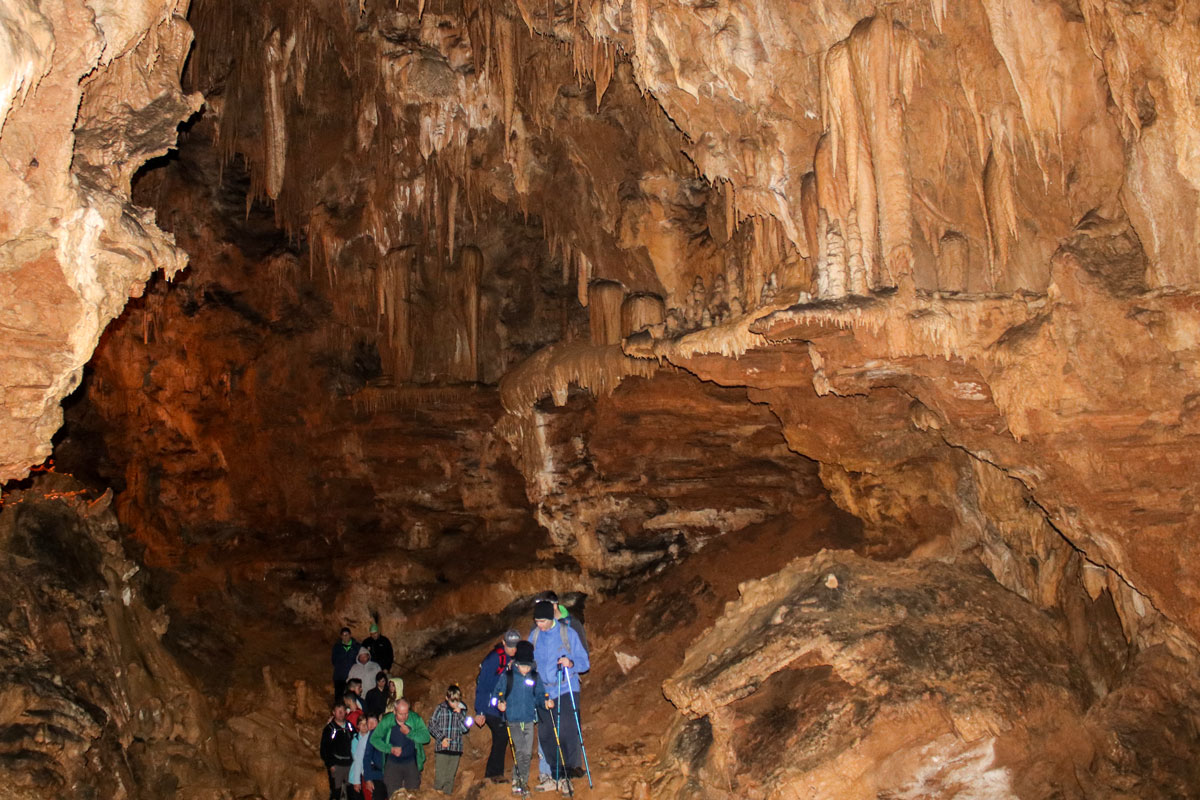
The cave under Babji zob lies at around 1,000 metres above sea level.
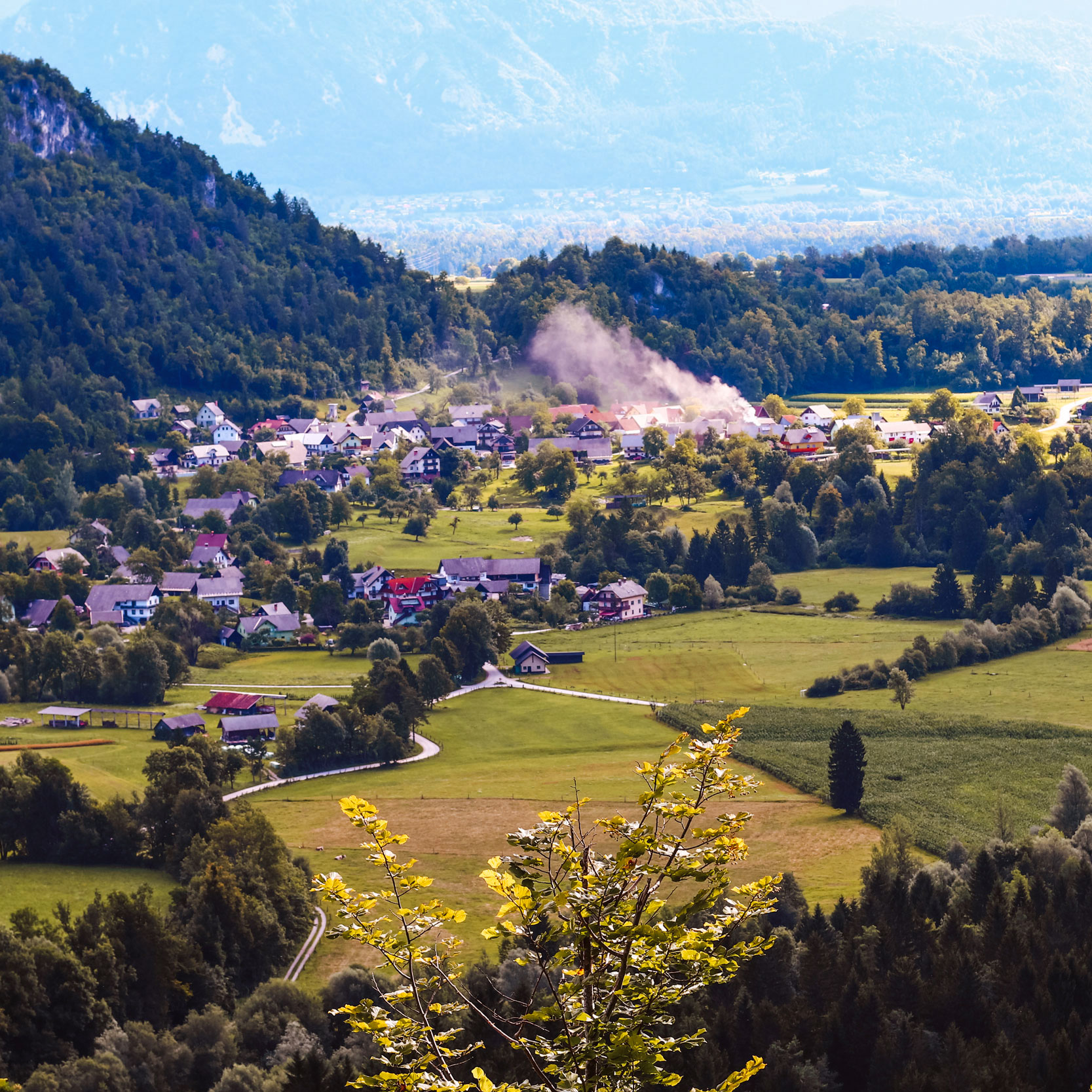
The cave under Babji zob lies above the village of Kupljenik and is known for its calcite crystals, which have been forming there for millions of years.
Hiking to the cave under Babji zob
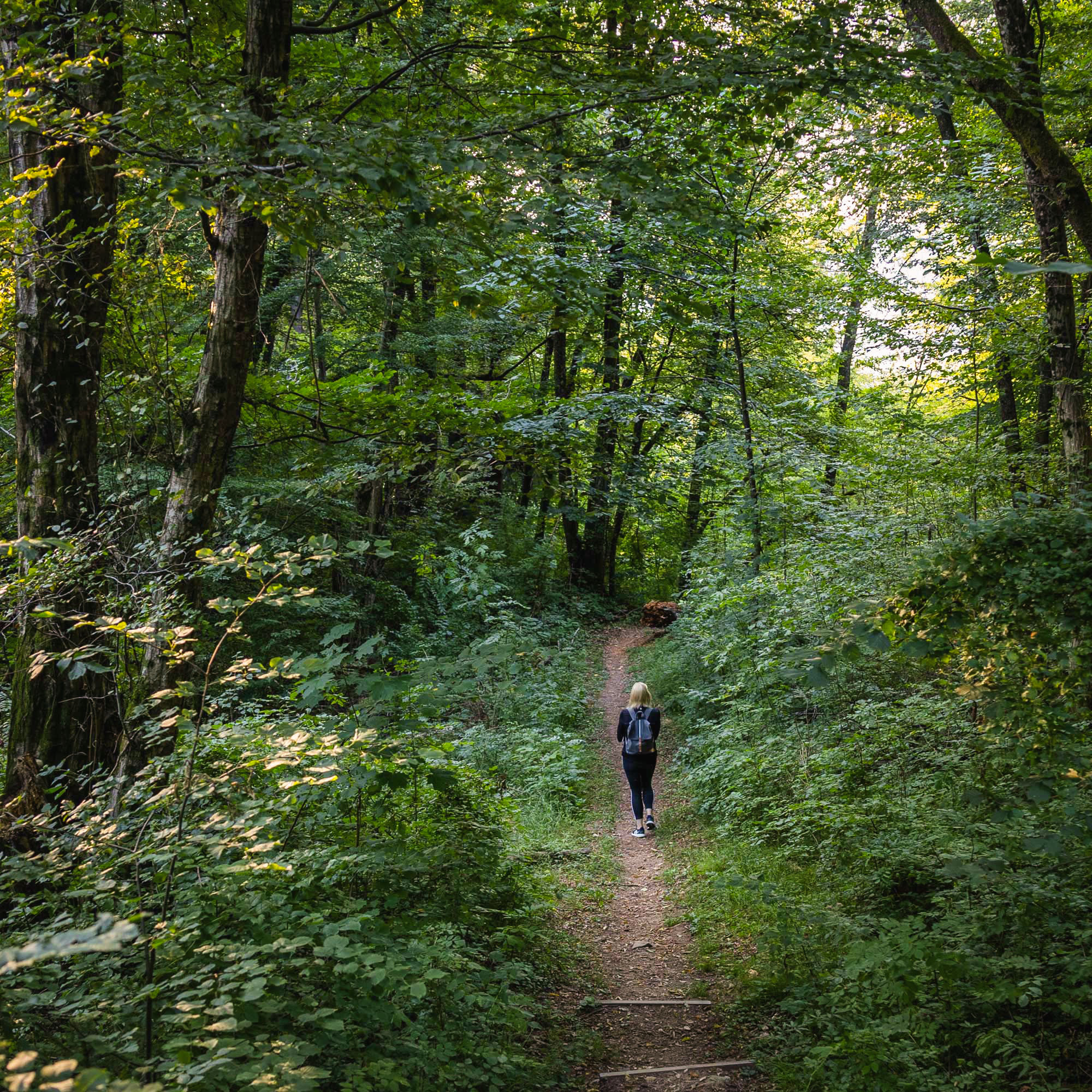
To reach the cave, you will hike above the Sava Bohinjka River, which flows below the villages surrounding Lake Bled. The path that leads upward is at times narrow and steep, guiding you steadily through the forest.
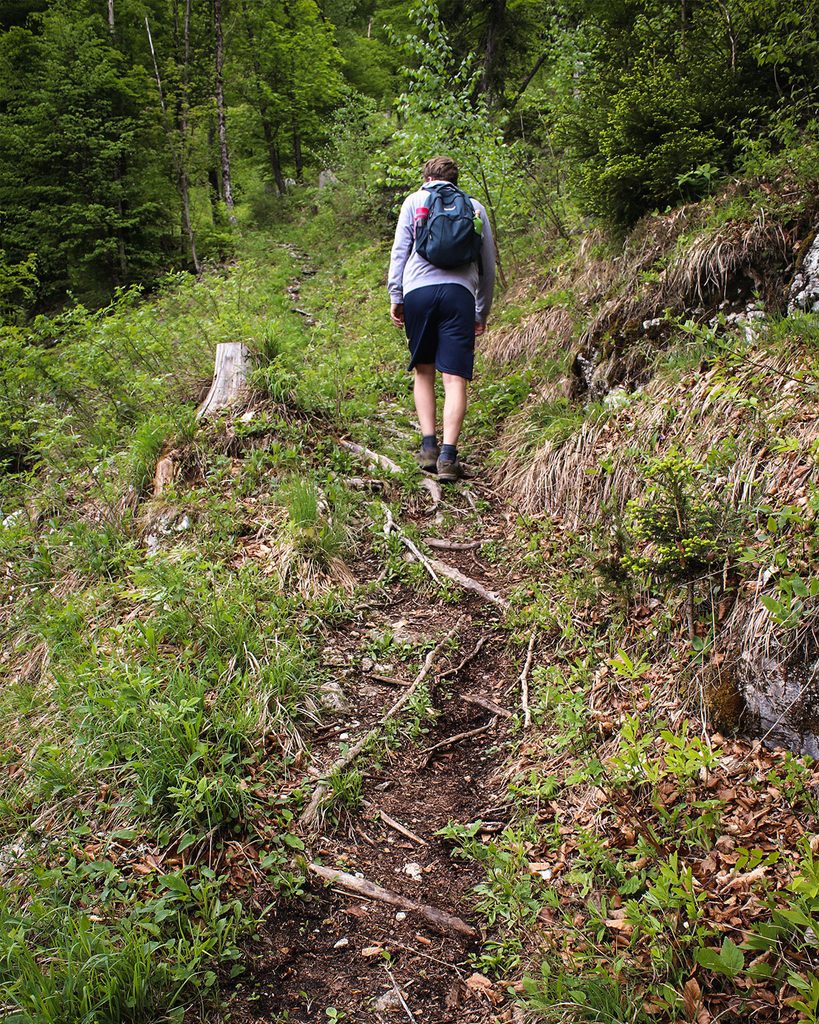
The hike to the cave under Babji zob starts in the forest below the village of Kupljenik.
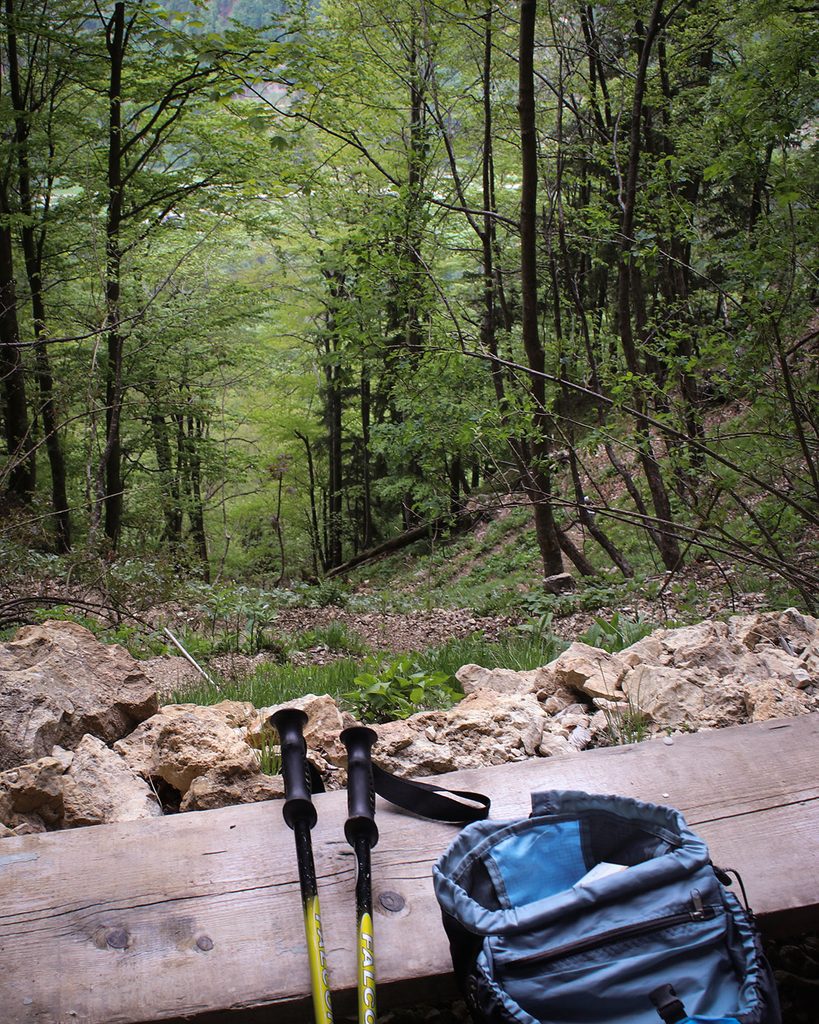
The cave’s entrance is situated under the Babji zob rock formation that is part of Jelovica plateau.
From the trail that leads to the cave under Babji zob, views open towards Pokljuka, another forested karst plateau that invites for peaceful walks and cycling in the warmer months, while in winter it is popular for cross-country skiing.
Visiting the cave under Babji zob
The cave under Babji zob is cared for by local cavers, who continue to protect it and share it through guided visits. Entry is possible only with them, a way of preserving the fragile world within.
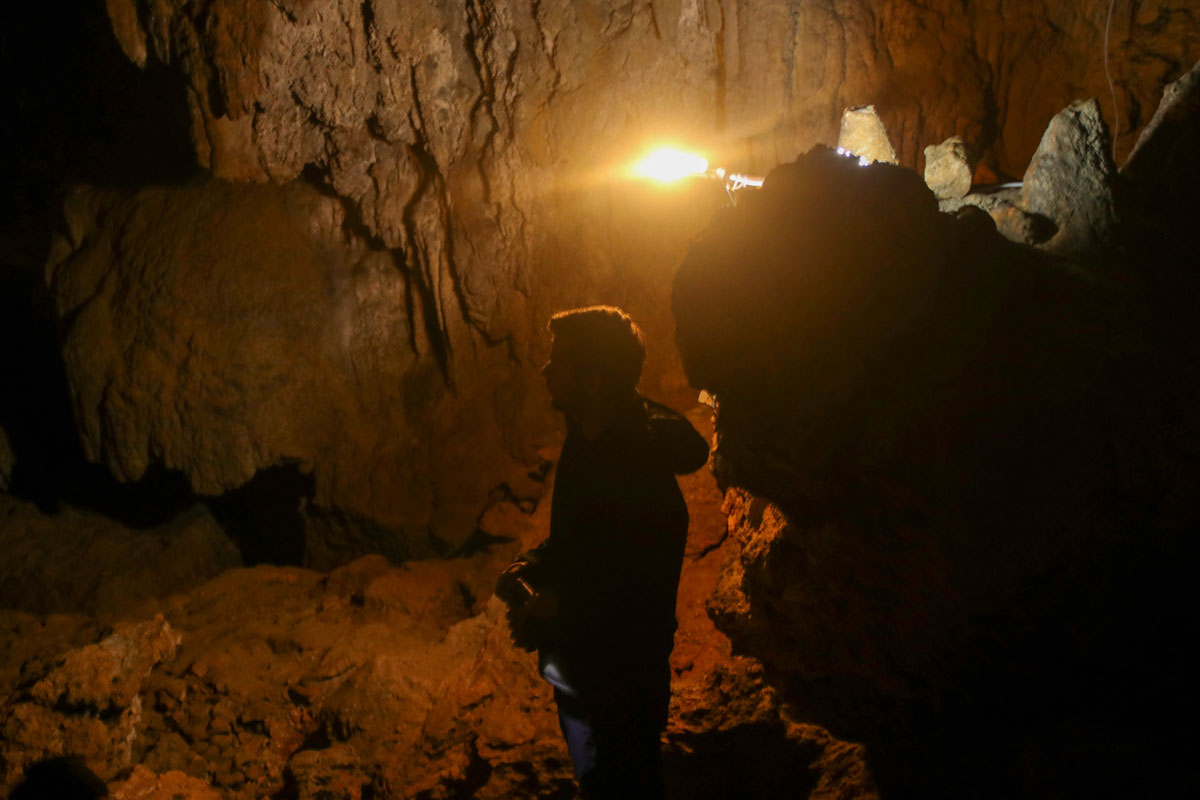
The cave under Babji zob can be visited only with local cavers, who guide small groups during the summer months.
On the 1st of May, when Workers’ Day is observed in Slovenia, the cave is opened for free guided visits. During these hours, more people tend to find their way there. Visiting at another time offers a more peaceful experience.
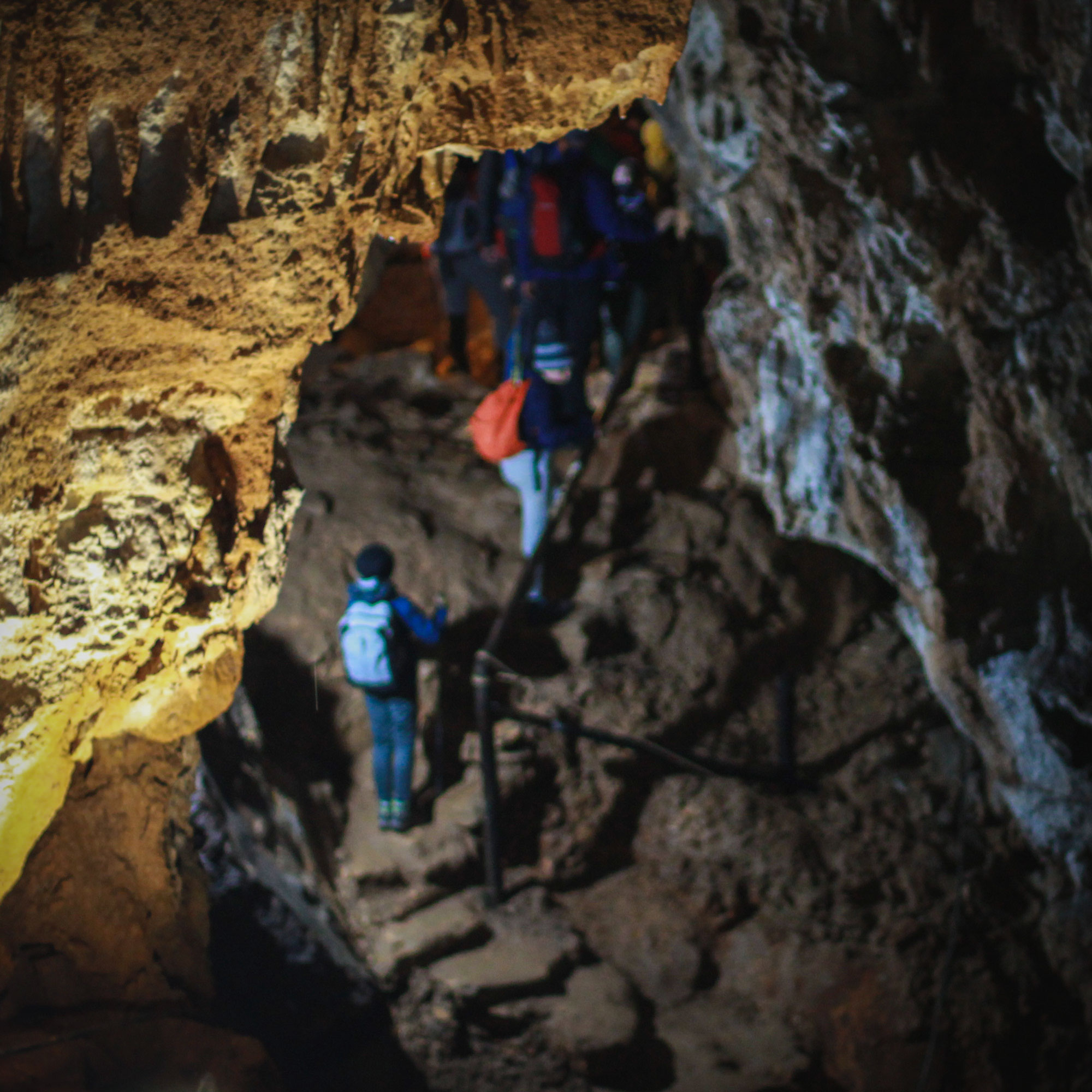
Inside the cave, the path leads through narrow passages and wider chambers, where different rock formations begin to emerge. In the dim light, certain shapes seem to appear: Does this shape resembles an animal? Or even a human face?
An interesting part of the visit comes once you are deep inside the cave. For a brief moment, the cavers guiding the tour will turn off all the lights, allowing you to experience the true darkness that rests inside the cave.
What awaits inside the cave
Like many karst caves in Slovenia, including the famous Postojna Cave, the cave beneath Babji zob reveals a quiet world shaped over time. Stalagmites rise slowly from the ground, while stalactites hang from the ceiling, each forming over thousands of years – growing only a few centimetres over the course of a millennium.
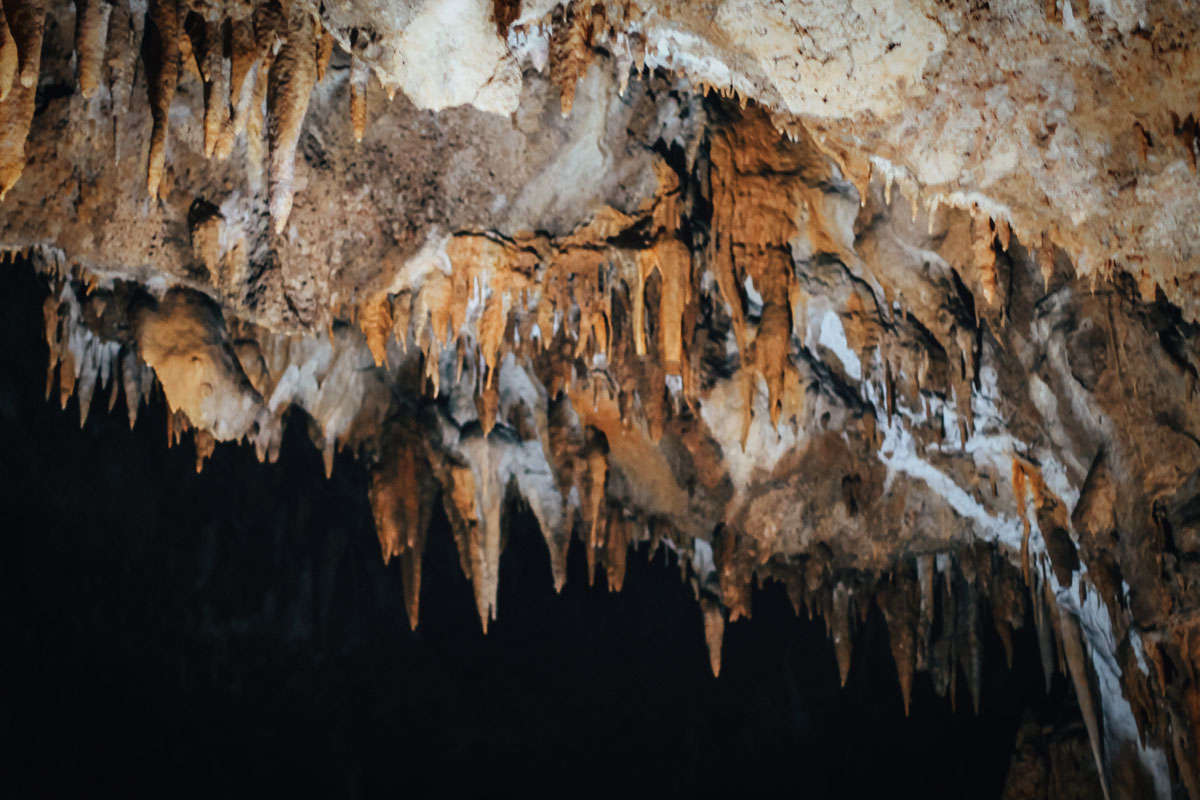
Inside the cave, different formations emerge from the dim light.
Further inside, more delicate formations begin to appear. Among them are helictites: small, curved shapes that seem to grow in unexpected directions.
Yet the oldest features of the cave are the calcite crystals. Formed millions of years ago, even before the cave itself took shape, they reflect a much longer history of the landscape. Calcite, one of the most common minerals in Slovenia, is also found in nature beyond caves, even within the skeletons of certain sea organisms.
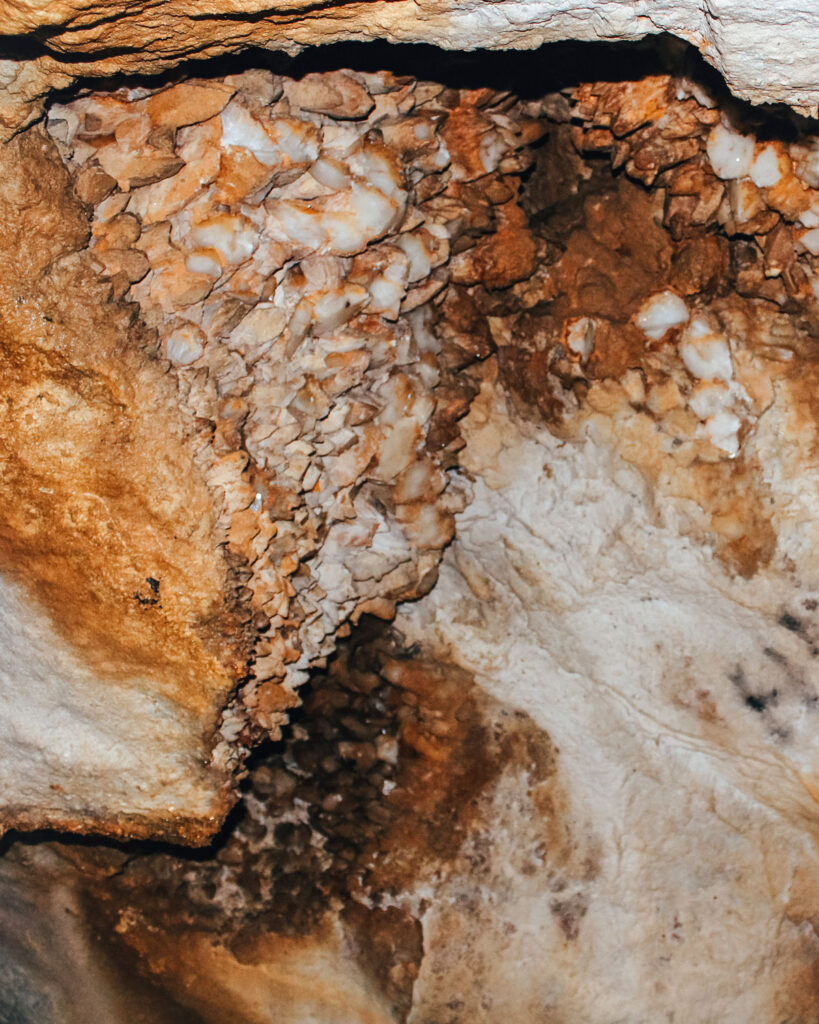
Calcite crystals are delicate formations that require careful protection.
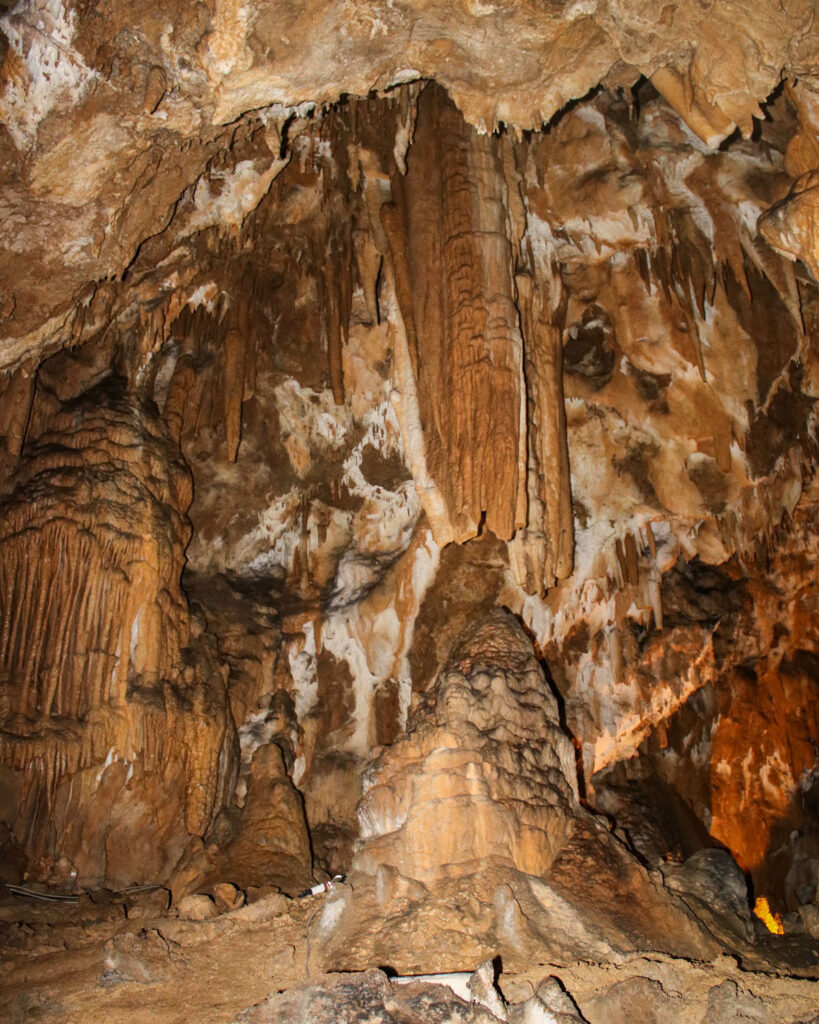
Stalagmites and stalactites in the cave below Babji zob.
Some of these crystals are estimated to be around 10 million years old. Over time, many have been damaged, a reminder of how fragile such formations are. What remains, however, still speaks of a slow and patient process that continues to this day.
Did you know that cavers have their own motto? It goes something like this: “Take nothing from the cave and leave nothing behind, except for the mud on your shoes.”
Beyond the usual views of Bled
The cave under Babji zob asks for a bit of effort first: a hike through the forest above the gorge of the Sava Bohinjka River. Only then does it reveal its wild beauty.
For those who enjoy places where nature unfolds slowly, this cave near Lake Bled offers a different side of the area: less polished and more off the beaten path.
If you are planning to visit the cave under Babji zob, the details below will help you prepare for this experience.
PRACTICAL INFORMATION
- Location: Set at just over 1,000 metres above sea level, the cave under Babji zob (Google maps) lies tucked into the Jelovica plateau, with the villages of Kupljenik and Bohinjska Bela resting below.
- Starting point: The trail to the cave begins in the forest below Kupljenik and leads upward for about an hour. The difference in altitude is 350 metres.
- Getting there: It is best to reach the starting point by bike, as there is no official parking area nearby. If you come by car, you can park in the village of Bohinjska Bela (Google maps), near the cultural centre (Dom krajanov Bohinjska Bela in Slovenian), and walk from there. From Bohinjska Bela, it takes around one hour to walk to the cave entrance. Follow the signpost marked “Jama” (cave in Slovenian).
- Visiting the cave: For more details about guided visits, please contact the local caving association. This experience, including the visit to the cave, takes around three to four hours.
- Safety: The trail to the cave is at times steep and narrow, so a steady step and good grip make the walk more comfortable. Trekking poles can be helpful, especially on the way down. Inside the cave, the temperature remains low, around 8°C, offering a cool contrast to the outside air in the summer, therefore a warm layer is welcome here. A small torch or headlamp helps make each step safer and allows you to notice the finer details in the dim light.