Reconnect with nature among Pokljuka’s forests
If you are looking for slightly more remote terrain, surrounded by forest, Pokljuka Gorge in Triglav National Park is a good choice.
Wild and unspoilt, it lies on the quiet edge of Pokljuka, a high karst plateau near Bled. With its cave, old forest trail and wooden galleries, it offers a peaceful place to relax and reconnect with nature.
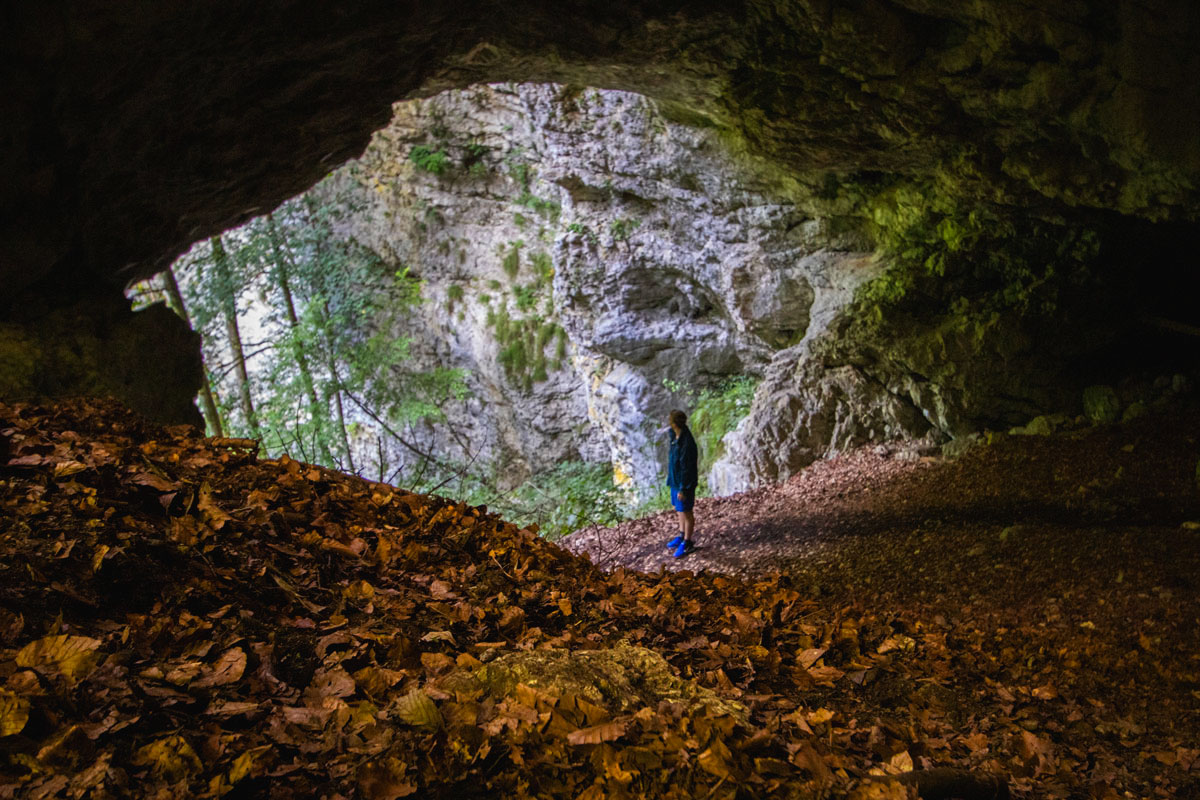
Apart from the forested trails, Pokljuka Gorge also hides a cave with natural windows.
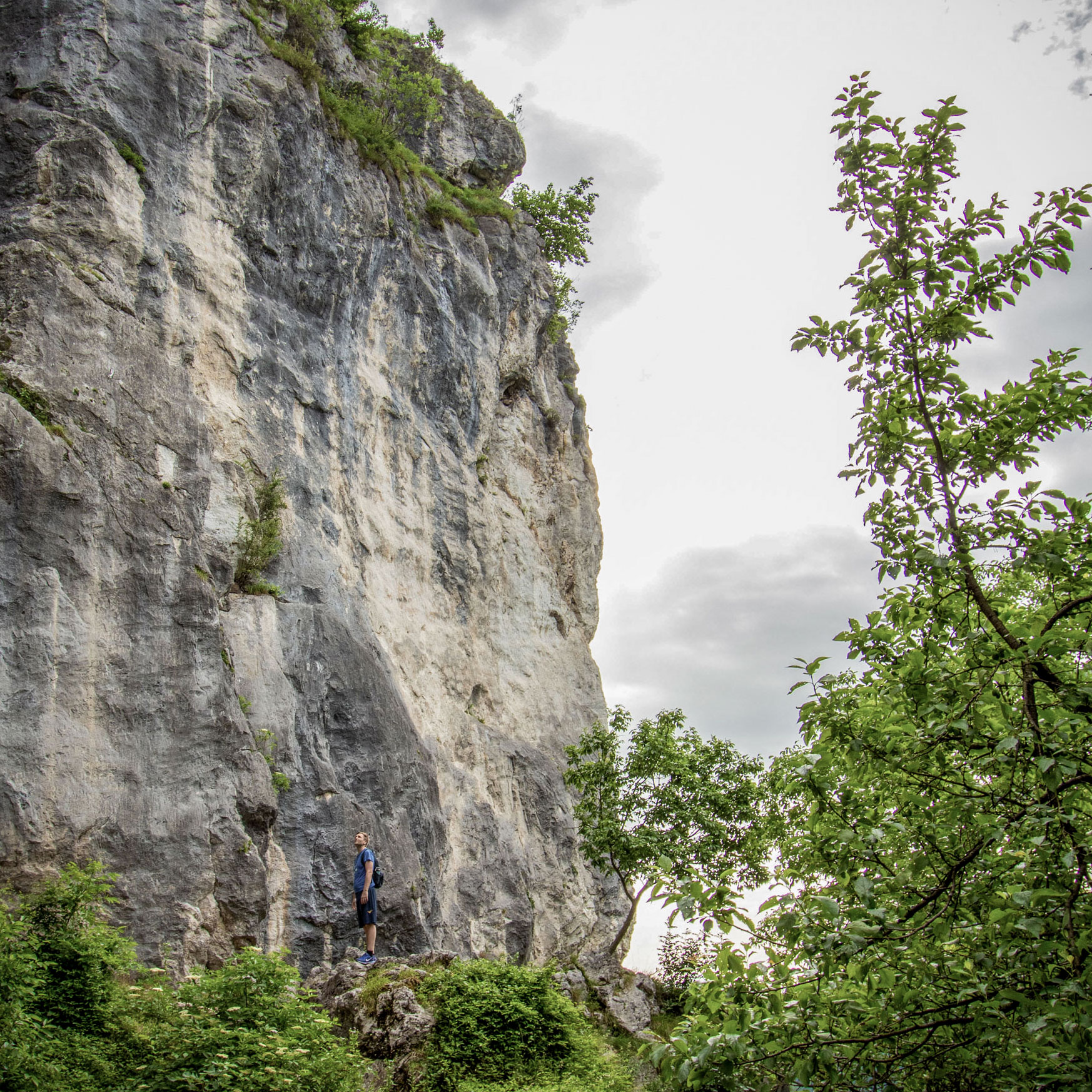
As you walk through the gorge, passing by its steep walls, it is hard to imagine that this place was once a shallow sea. Around 200 million years ago, in the time of the dinosaurs, corals grew here.
Today, their traces remain – preserved in the fossils in the limestone, quietly telling the story of a world that no longer exists.
Following the trail throught Pokljuka Gorge
There are several ways to reach Pokljuka Gorge. The route described here starts in the village of Krnica, near the Radovna Valley, about eight kilometres from Lake Bled. Two other paths lead into the gorge from higher up on the Pokljuka Plateau, starting in the small settlements of Zatrnik and Mrzli Studenec.
Between the village of Krnica and the entrance to the gorge, a macadam road leads through green meadows and open fields.
As you arrive near the entrance to the gorge above Krnica, you will notice a hiking trail following a usually dry riverbed. Wooden signposts along the way quietly point towards Pokljuka Gorge, or Pokljuška soteska in Slovenian.
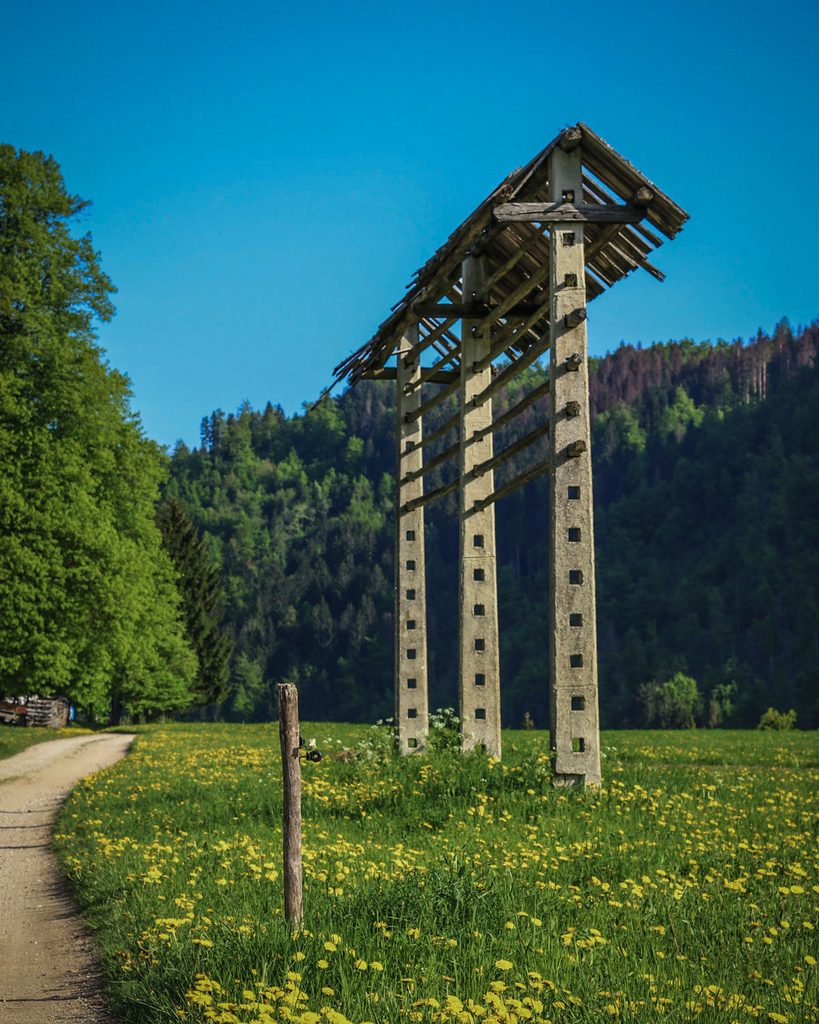
Macadam road leading to the entrance to Pokljuka Gorge.
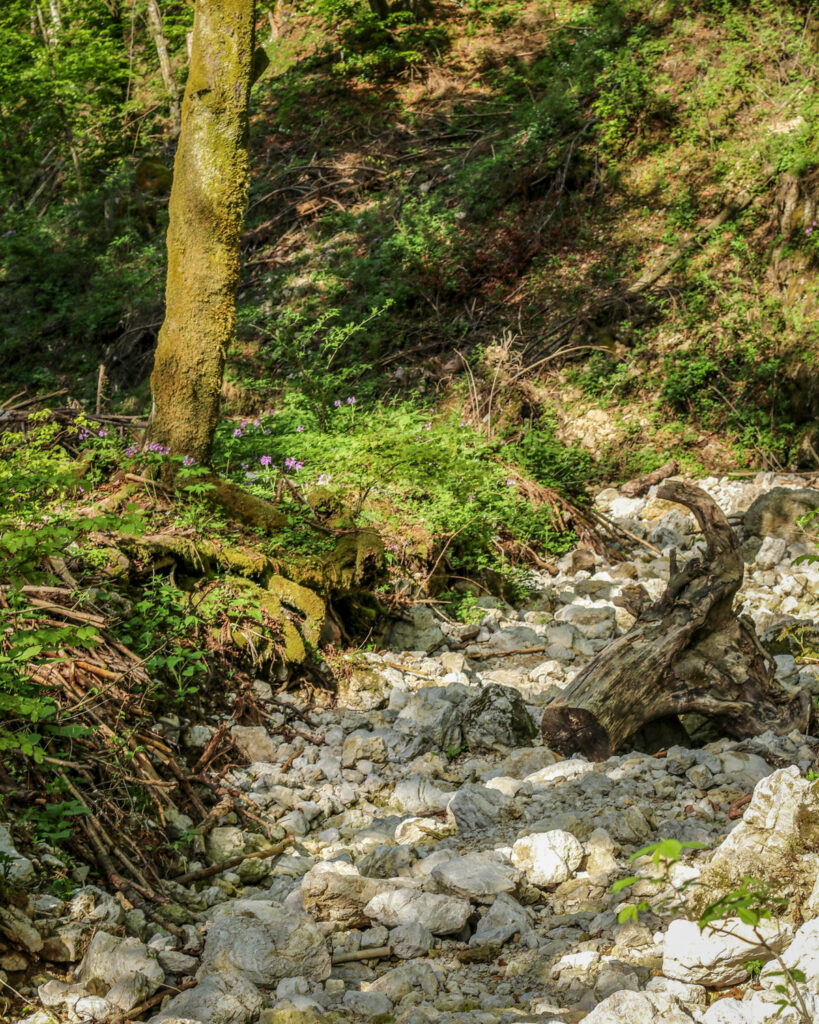
Beginning of the trail running through the gorge with a dry riverbed.
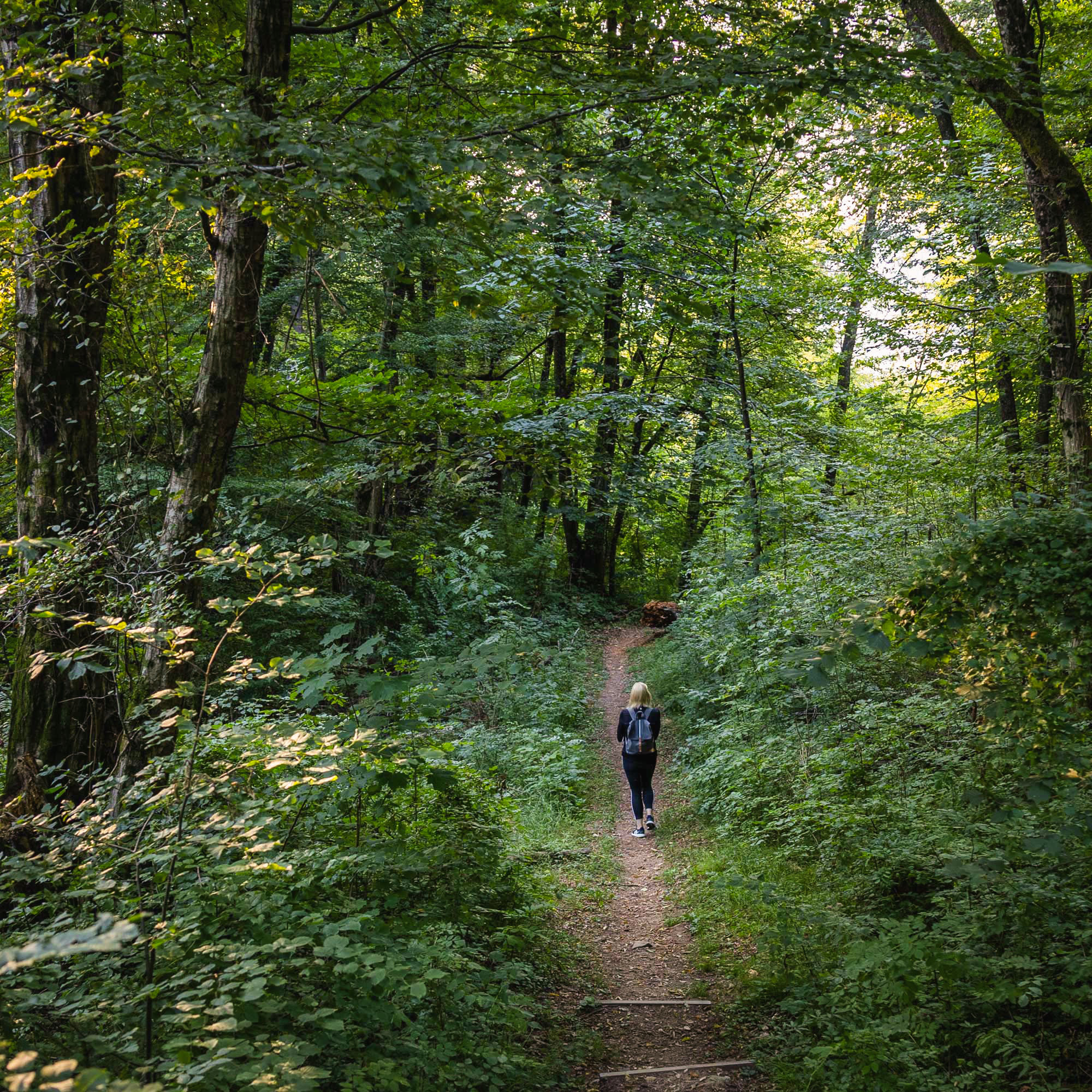
As you enter the gorge, you will soon find yourself surrounded by forest. As the path gently climbs, the trees grow denser and the sides of Pokljuka Gorge begin to rise steeply. Here and there, the trail opens into small green clearings known as vrtec, small pockets filled with lush vegetation along the trail.
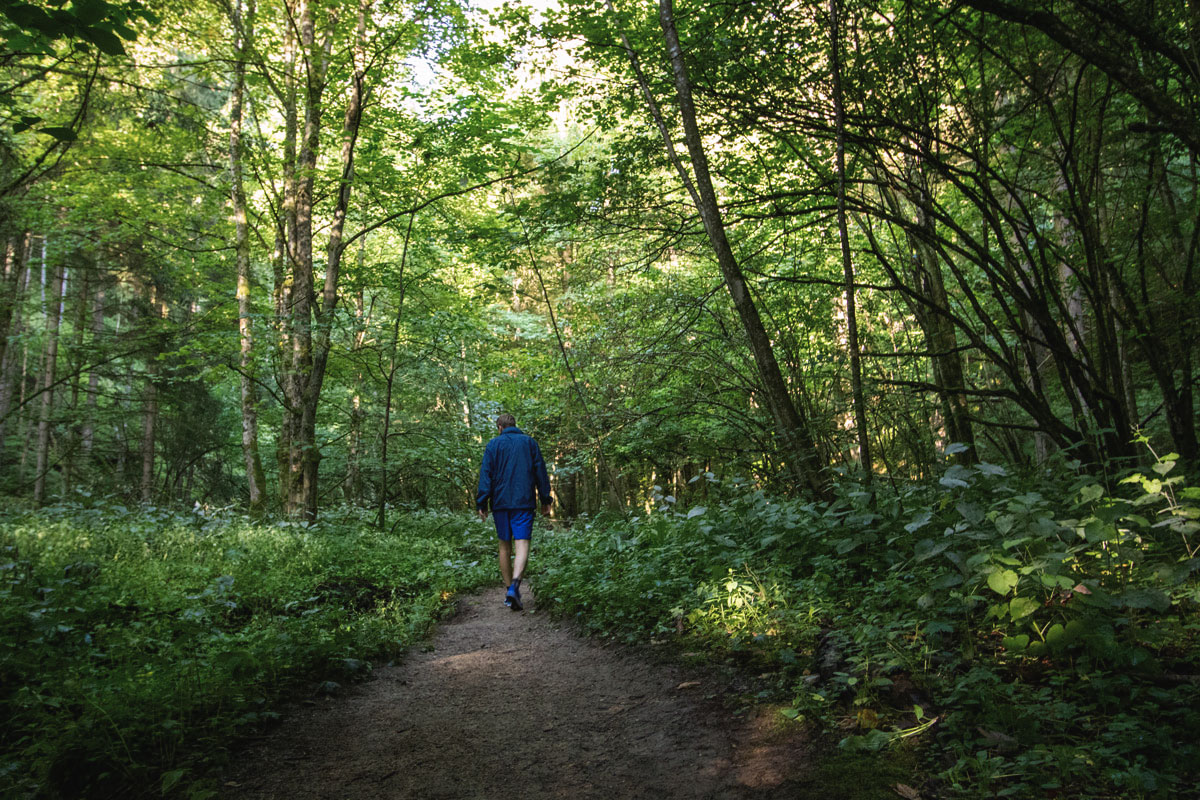
The wider, green sections of Pokljuka Gorge are known as vrtec.
After around twenty minutes of walking, the trail splits in two. The path to the left leads into a quiet side valley, ending beneath a steep rock wall where a waterfall occasionally appears after heavy rain or during the spring snowmelt.
After about thirty minutes on the main trail, you will reach an intersection marked by a pair of wooden signposts. The path to the right leads towards Pokljuška luknja – the Pokljuka Hole, a cave known for its natural windows, through which soft light quietly enters the cave.
The trail to the left continues deeper into the gorge towards the Prince Andrew Galleries.
Entering Pokljuka Hole
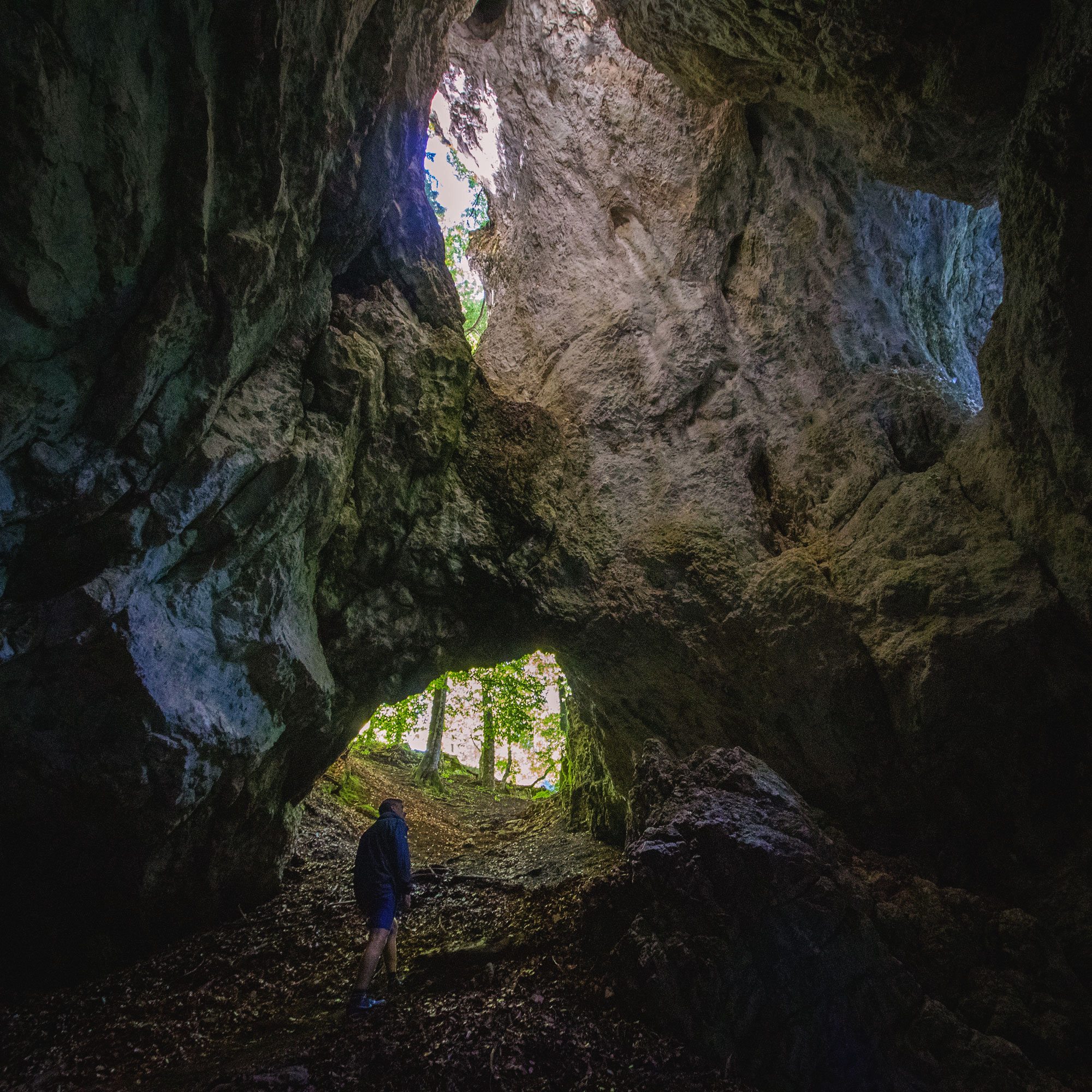
As you step into Pokljuka Hole, you can sense the quiet presence of the past. This cave, shaped with three natural windows and a passage leading through to the other side, once served as a route for locals travelling towards the Pokljuka Plateau for centuries.
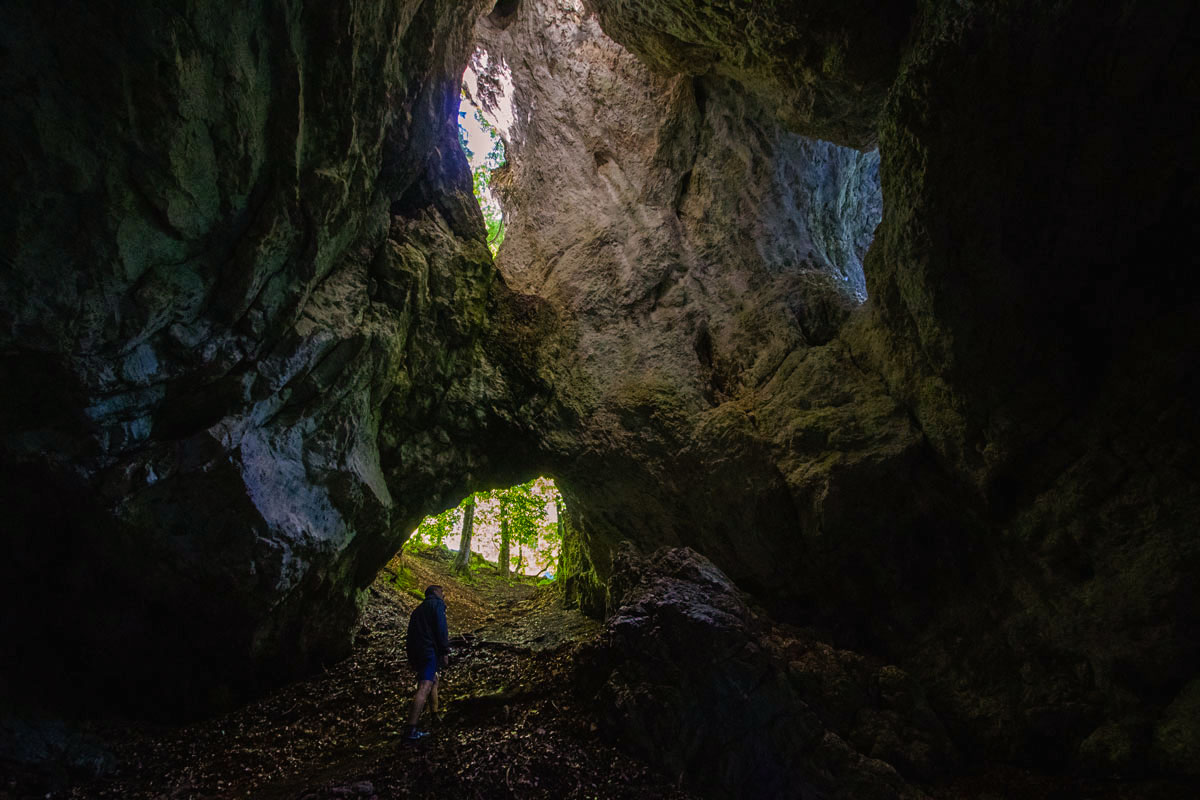
Inside the Pokljuka Hole, light enters the cave through its natural windows.
For generations, locals used this route while heading into the forests of Pokljuka to collect resin and wood for charcoal production, which played an important role in iron smelting until the late 19th century.
Along the wooden galleries of Pokljuka Gorge
After exploring Pokljuka Hole, return to the intersection and continue along the trail to the left. The path passes beneath a natural bridge before leading further towards the Prince Andrew Galleries.
Built in 1930, the Prince Andrew Galleries are wooden bridges attached to the steep rock walls above the gorge. They connect the upper and lower sections of Pokljuka Gorge.
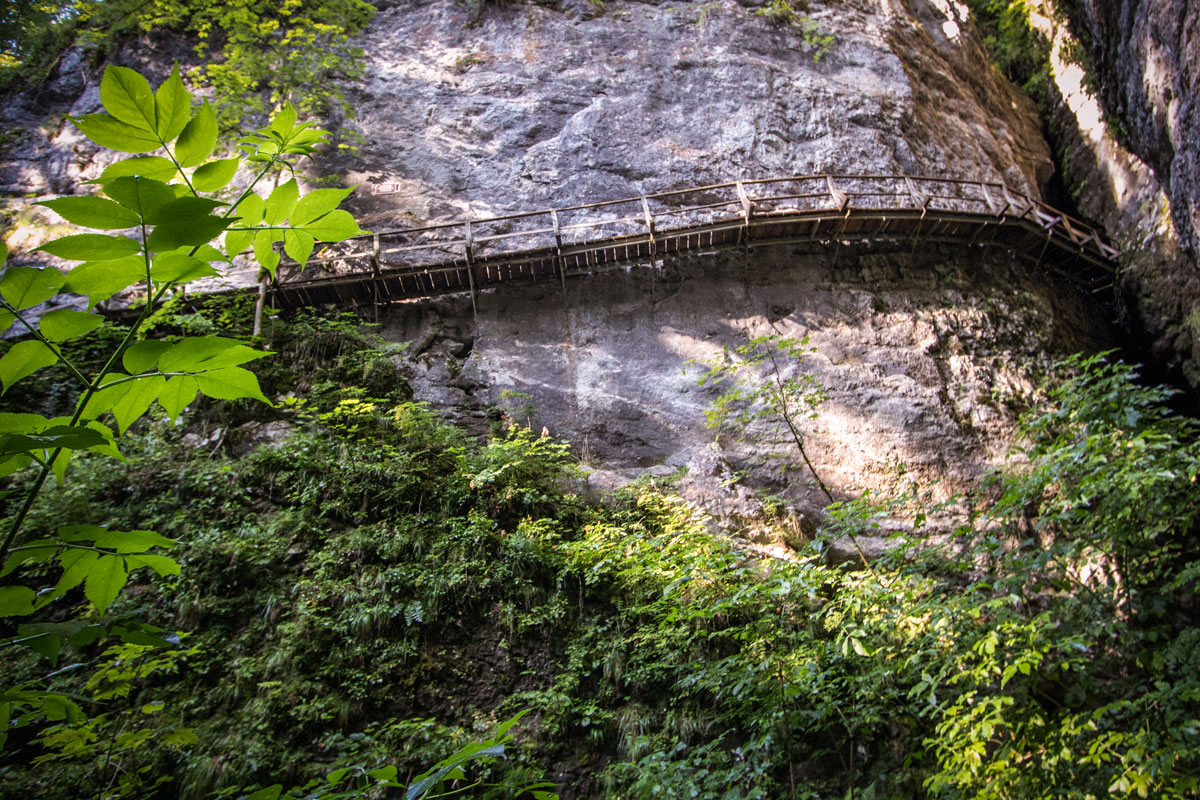
Enjoy the views from the Prince Andrew Galleries before continuing deeper into the gorge, where narrow rock passages and wild terrain invite further exploration.
The galleries were named after Prince Andrew, the son of King Alexander I of Yugoslavia, who was born in Bled. At the time the wooden galleries were built, Bled belonged to the Kingdom of Yugoslavia. Their construction finally made it possible to pass through Pokljuka Gorge from one end to the other.
Find calm in the quiet of Pokljuka Gorge
With its lush vegetation, inspiring natural formations and untamed terrain, Pokljuka Gorge offers a quiet escape into nature.
If you plan to visit Pokljuka Gorge between June and August, when the Bled area is at its busiest, it is worth starting your walk early in the morning. At that time of day, the trails are usually quieter, allowing you to experience the gorge in a more peaceful and undisturbed way.
Below, you’ll find a few practical details to help you plan your hike through Pokljuka Gorge.

PRACTICAL INFORMATION
- Location: Pokljuka Gorge (Google maps) lies on Pokljuka Plateau in Triglav National Park, around eight kilometres northwest of Bled. The gorge is located in the Municipality of Gorje, an area also known for another natural attraction, Vintgar Gorge.
- Starting point: The hike begins in the village of Krnica, on the edge of the Radovna Valley below the Pokljuka Plateau.
- Getting there: It is best to reach Krnica by bike or by bus. The bus stop is called Krnica. If you are coming by car, the closest parking areas are in the nearby village of Zgornje Gorje: one next to the elementary school and another by the cemetery. From there, it is about a 30-minute walk to the starting point.
- Walking time: The gorge is around two kilometres long, and a slow hike through the gorge and back to the starting point takes around an hour and a half.
- Safety: The terrain inside the gorge is wild and uneven, so proper hiking or trekking shoes are recommended, especially as some rocks can be slippery. The trail gradually climbs through mostly shaded forest, with occasional open sections where more light reaches the gorge. It is also advisable to wear a helmet, especially in spring. Learn more about staying safe in Pokljuka Gorge on the official website of the Triglav National Park.